Loggerhead sea turtles return annually to Isle of Palms, South Carolina, to nest on its sandy beaches. Each year, the island sees around 40–50 nests, with about 120 eggs per nest. These turtles, weighing 200–400 pounds, are a federally threatened species and play a critical role in marine ecosystems. Conservation efforts, led by the Island Turtle Team and local organizations, have improved hatchling survival rates from 1 in 10,000 to 1 in 1,000.
Key Facts:
- Nesting Season: May 1 to October 31 (peak nesting: June–July; hatching: July–October).
- Nesting Behavior: Females nest at night, laying eggs in 2-foot-deep holes.
- Hatchling Survival: Only 1 in 1,000 make it to adulthood.
- How to Help: Turn off beach lights, remove gear overnight, and fill in holes.
Visitors can support conservation by following beach rules, reporting injured turtles, and participating in educational programs like "Sea Stroll & Learn." By taking simple actions, you contribute to the protection of these turtles and their habitats.
Loggerhead Sea Turtle Basics
Loggerhead sea turtles are easy to recognize, thanks to their reddish-brown shells, creamy gold to medium-yellow undersides, and strong jaws built for crushing prey like crabs and clams. They’re the only sea turtle species that regularly nests on Isle of Palms.
These turtles are no lightweights – they can tip the scales at 200–400 pounds and measure about 3 feet long (33 to 48 inches). Despite their size, they’re classified as "threatened" in the U.S. and "endangered" globally. Loggerheads rank as the third largest marine turtle species, behind leatherbacks and green turtles.
Reaching sexual maturity takes time – about 20–35 years – and they can live for 50–80 years or more. While males stay in the ocean, females make an incredible journey back to their birthplace to nest, guided by a natural magnetic compass and homing instinct. These traits make Isle of Palms a standout location for loggerhead nesting.
Why Loggerheads Nest on Isle of Palms
Isle of Palms offers everything a loggerhead needs to nest successfully. The island’s wide, sandy beaches are perfect for digging nests, while South Carolina’s warm climate ensures the eggs incubate at the right temperature. Female loggerheads are incredibly loyal to their birthplace. On Isle of Palms, genetic studies have revealed that a "matriarch" turtle has been nesting on the island’s north end for decades. Since 2018, six of her daughters have also returned to continue the cycle. These unique nesting behaviors inspire local conservation programs aimed at protecting both the turtles and the natural beauty of the island.
Loggerhead Turtle Facts
Here are some fascinating details about loggerhead turtles:
- Size and Growth: Hatchlings are tiny, measuring just about 1.7 inches and appearing dull brown. Over time, they grow into massive adults weighing 200–400 pounds.
- Diet: Loggerheads are carnivores, feeding on crabs, lobsters, clams, sea urchins, and jellyfish.
- Temperature-Dependent Sex: The temperature of the nest determines the hatchlings’ sex. Warmer nests produce more females, while cooler nests yield more males. This has major implications for conservation efforts.
- Survival Rates: The odds are tough – only about 1 in 1,000 hatchlings make it to adulthood.
- Nesting Habits: Females nest every 2 to 4 years, laying about 120 eggs per nest. These eggs, roughly the size of ping-pong balls, take 45 to 60 days to incubate.
Nesting Season Timeline
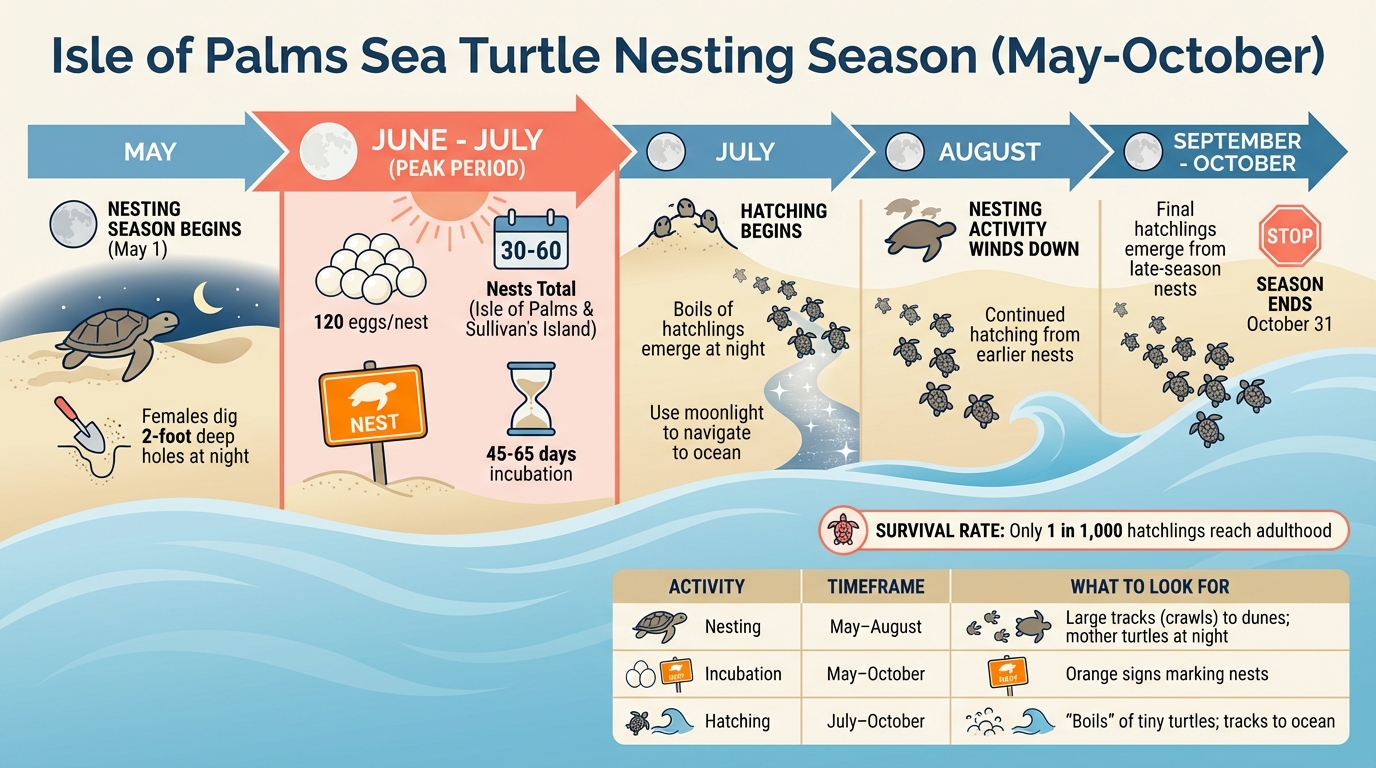
Isle of Palms Sea Turtle Nesting Season Timeline May-October
The sea turtle nesting season on Isle of Palms officially runs from May 1 to October 31 each year. This six-month period covers everything from the first nests being laid to the final hatchlings making their way to the ocean.
When Nesting Occurs
Female loggerhead turtles nest between May and August, with the busiest months being June and July. Once the eggs are laid, they incubate for 45 to 65 days before hatching begins. Hatching typically starts in July and continues through October for nests laid later in the season. Each year, Isle of Palms and Sullivan’s Island host between 30 and 60 nests. A single female can nest up to six times in one season, returning roughly every two weeks.
Occasionally, nesting may start earlier due to unusually warm winters, although this is rare. For instance, in 2017, warmer winter weather prompted turtles to nest ahead of schedule.
After the eggs are laid, a series of nighttime activities ensures the nests are incubated and hatchlings eventually emerge.
What Happens During Nesting
During the nesting phase, female loggerheads come ashore at night to dig their nests and lay eggs. They dig holes about two feet deep, deposit around 120 eggs – each roughly the size of a ping pong ball – cover the nest with sand, and return to the ocean. Early morning beachgoers might notice the distinctive "crawls", or tracks, left by the mothers as they move between the water and the dunes.
Hatchlings also emerge at night, using the moonlight and the white surf to guide them to the sea. When many hatchlings emerge from a nest at once, volunteers describe it as a "boil" – a sudden rush of tiny turtles scrambling toward the ocean. It usually takes about three days for all the hatchlings to emerge after breaking out of their shells. According to Michelle Pate, a Wildlife Biologist with the South Carolina Department of Natural Resources, warmer temperatures can speed up the incubation process:
"The emergence of hatchlings from nests reported so far is well under the average 60-day incubation period. This shortened incubation period typically happens with nests laid early in the season".
These patterns highlight the importance of protecting nesting beaches to support conservation efforts.
| Activity | Timeframe | What to Look For |
|---|---|---|
| Nesting | May – August | Large tracks (crawls) leading to dunes; mother turtles at night |
| Incubation | May – October | Orange signs marking nest locations |
| Hatching | July – October | "Boils" of tiny turtles emerging from sand; tracks leading to the ocean |
How to Help Protect Sea Turtles
Isle of Palms has a long history of sea turtle conservation, and your actions on the beach can make a real difference in safeguarding these incredible creatures. From May through October, the Island Turtle Team – a group of about 170 dedicated volunteers who patrol the beaches at sunrise – works tirelessly to protect nesting sea turtles and their hatchlings. By following a few simple rules, you can contribute to this important effort.
Beach Rules for Turtle Protection
Turn off all lights near the beach, including outdoor, balcony, and interior oceanfront lights, and keep blinds closed. Artificial lights can confuse nesting turtles and hatchlings, which rely on the moon and ocean’s natural glow to find their way. Avoid using flashlights or any portable light sources after dark.
Remove personal belongings – such as chairs, umbrellas, tents, and toys – from the beach before sunset. Items left overnight can block turtles from reaching nesting areas, and the city may confiscate and dispose of them.
Fill in holes and level sandcastles before leaving. Deep holes can trap turtles and hatchlings, while adult females may struggle to escape if they fall in head-first.
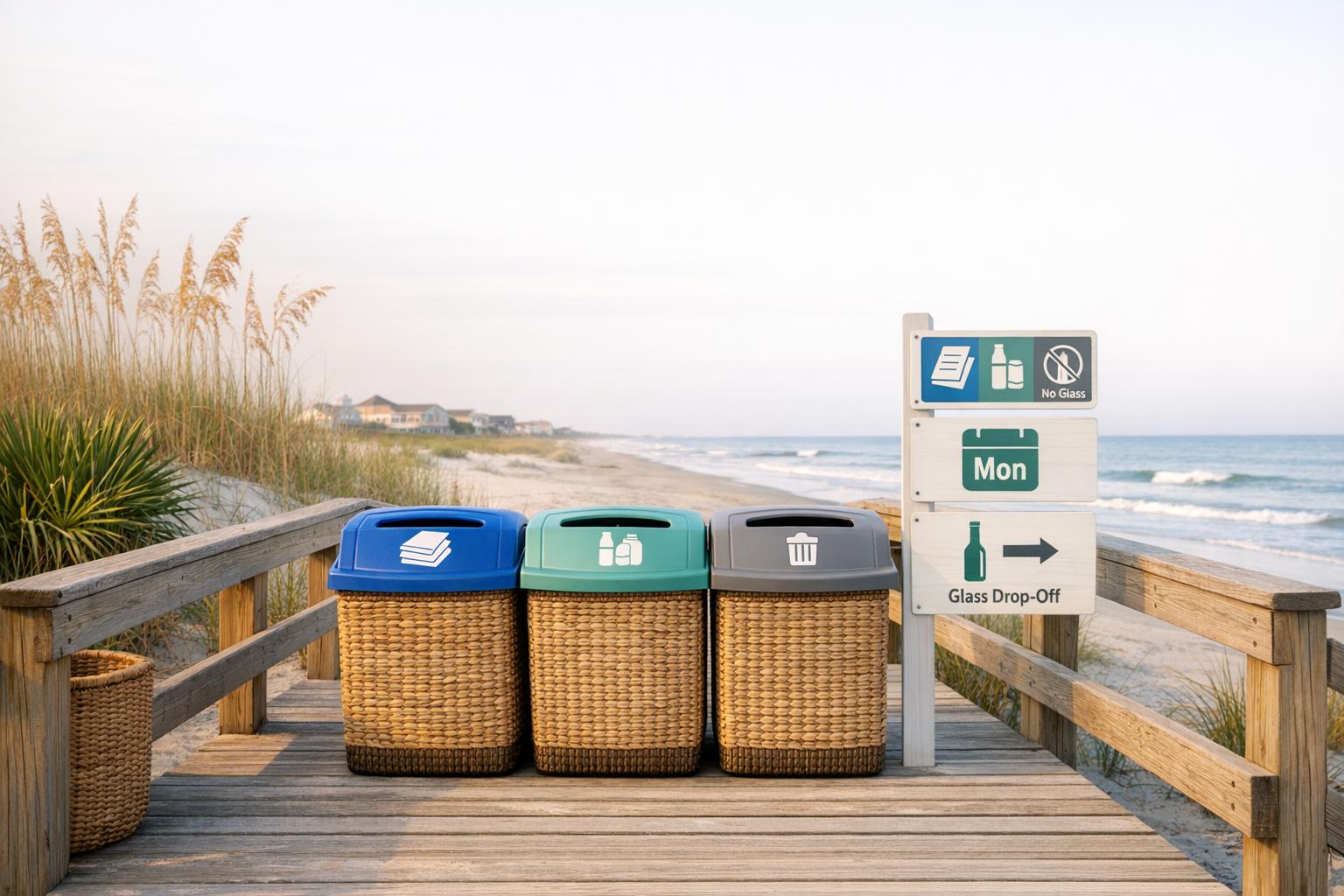
To further protect sea turtles, Isle of Palms bans single-use plastic bags, plastic straws, Styrofoam coolers and cups, balloons, and glass containers on the beach. These items can harm turtles through ingestion or entanglement. Additionally, avoid marked nesting areas, which are identified by bright orange signs, and always keep pets leashed near these zones.
Reporting Injured Turtles
If you come across a turtle in distress, quick action is crucial. Call 1-800-922-5431 (SCDNR) or 843-886-6522 (Isle of Palms Police) to report situations such as injured or dead turtles, hatchlings heading toward artificial lights, or nests threatened by high tides. The City of Isle of Palms emphasizes:
"It’s an emergency if you see an injured or dead sea turtle on the beach or in the water, a nest in jeopardy due to a high tide, or a nest that is hatching with hatchlings headed away from the ocean".
If a stranded turtle has already been marked with neon orange spray paint, it means the incident has been reported – do not remove any tags. Never handle sea turtles, hatchlings, or their eggs. If you spot a nesting female or emerging hatchlings, keep your distance, stay quiet, and simply observe.
sbb-itb-af832cd
Conservation Programs on Isle of Palms
The Isle of Palms is home to a variety of conservation efforts aimed at protecting sea turtles and their nesting habitats. One standout initiative is the Island Turtle Team, a dedicated group of 170 volunteers who patrol the beaches at sunrise from May through August. These early risers track new turtle activity, mark nests with bright orange signs, and, when necessary, relocate eggs laid too close to the high tide line.
Backing these efforts is the South Carolina Department of Natural Resources’ Sea Turtle Conservation Program. This organization provides critical oversight, offers training, and manages statewide reporting for strandings and nesting data. When turtles face injuries or illness – whether from boat strikes, entanglements, or disease – the South Carolina Aquarium Sea Turtle Care Center in Charleston steps in to provide medical care and rehabilitation before returning them to the ocean. Thanks to these combined efforts, the survival rate of hatchlings has improved dramatically, increasing from 1 in 10,000 to about 1 in 1,000.
Local government and community organizations also play a key role. The City of Isle of Palms enforces "Lights Out" ordinances and beach regulations to protect nesting turtles, while the Wild Dunes Community Association (WDCA) contributes financially to conservation initiatives. For example, WDCA is investing around $27 million in a beach renourishment project slated for 2025, which will add up to 2.5 million cubic yards of sand to restore and safeguard critical nesting habitats.
Volunteer Opportunities
For those looking to get involved, the Island Turtle Team offers a hands-on way to make a difference. Volunteers can sign up to monitor specific sections of the beach one day per week during nesting season. Duties include spotting turtle tracks at sunrise, keeping an eye on nests until they hatch, and collecting one egg per nest for DNA testing to trace maternal lineages. Due to high demand, all volunteer slots for 2025 have already been filled.
If a full-season commitment isn’t feasible, there are still ways to participate. The Isle of Palms Recreation Department, in collaboration with the Island Turtle Team, hosts "Sea Stroll & Learn" events. These educational morning walks, launched in July 2023 by Recreation Director Karrie Ferrell, offer a closer look at nesting areas and sustainable practices. Ferrell shared her enthusiasm for the program:
"We are so excited to join our amazing Island Turtle Team to provide a new educational series for our residents and visitors that ensures sustainability for our beautiful island for all to enjoy for years to come".
These walks are a fantastic opportunity for residents and visitors alike to learn about conservation efforts while enjoying the natural beauty of the island.
How Local Businesses Help
Local businesses also play a meaningful role in supporting conservation. Many vacation rental companies educate their guests about sea turtle protection and promote eco-friendly practices. For example, Lowcountry Vacation Properties uses sea turtles as a symbol of conservation and informs guests about essential beach rules, such as turning off floodlights and removing beach gear overnight to keep nesting paths clear. Their vacation guides emphasize the importance of the "Lights Out" policy and respectful beach behavior during nesting season.
Another example is Aerie at 715 Ocean, which actively educates guests about the nesting season and the importance of adhering to local beach ordinances. The property encourages visitors to remove personal items from the beach before sunset and keep outdoor lighting off from May through October. By choosing accommodations that prioritize wildlife protection, visitors can directly contribute to creating safer nesting conditions for loggerhead sea turtles.
Conclusion
Isle of Palms provides a unique chance to witness an extraordinary natural phenomenon – the nesting and hatching of loggerhead sea turtles. From May to October, these majestic creatures return to the beaches, highlighting the delicate balance between enjoying the coast and protecting its wildlife.
Your choices during this season can make all the difference. Small steps, like turning off beachfront lights, clearing the beach of chairs and umbrellas before nightfall, and filling in holes, significantly improve the odds for hatchlings. Considering how rare it is for these tiny turtles to survive, these simple actions carry immense weight in conservation efforts.
Beyond individual actions, the community plays a pivotal role in protecting these sea turtles. Around 170 volunteers from the Island Turtle Team, working alongside the South Carolina Department of Natural Resources and local businesses, form a robust support network. By choosing accommodations that prioritize turtle safety and engaging in educational programs like the "Sea Stroll & Learn" series, you can actively contribute to these efforts. If you spot an injured turtle or a nest in danger, reporting it to local authorities (IOP Police at 843-886-6522 or SCDNR at 1-800-922-5431) provides vital assistance to conservation teams.
A visit to Isle of Palms during turtle season offers more than just a relaxing beach escape – it’s an opportunity to help protect South Carolina’s state reptile. By following beach guidelines and staying informed about nesting activity, you’re contributing to the survival of these incredible creatures for generations to come.
FAQs
What can visitors do to help protect sea turtles during nesting season on Isle of Palms?
Visitors play a crucial role in protecting sea turtles on Isle of Palms, especially during nesting season, which runs from May through October. One of the most important ways to help is by minimizing artificial light near the beach at night. Bright lights can disorient both nesting turtles and hatchlings, leading them away from the ocean. To prevent this, turn off outdoor lights, close curtains or blinds, and steer clear of using flash photography or shining flashlights on turtles or their nests. Always maintain a respectful distance to avoid causing stress or harm to these animals.
Another key practice is following the "leave only footprints" rule. This means clearing the beach of all trash, chairs, umbrellas, and other belongings at the end of the day. It’s also important to fill in any holes or sandcastle pits, as these can become dangerous traps for turtles and their hatchlings. If you spot a nest, turtle tracks, or an injured turtle, notify local authorities immediately. You can reach the Isle of Palms Police at 843-886-6522 or the South Carolina Department of Natural Resources at 1-800-922-5431.
For guests staying at Aerie at 715 Ocean, following these guidelines is simple. Turn off exterior lights, keep window coverings closed after dark, and adopt eco-friendly habits while enjoying the nearby beach. These small yet meaningful actions contribute to the survival of the 30 to 50 loggerhead nests laid each season, giving hatchlings a better chance to safely reach the ocean.
Why is Isle of Palms a prime nesting spot for loggerhead sea turtles?
Isle of Palms strikes a perfect balance between natural beauty and active conservation, making it an ideal nesting spot for loggerhead sea turtles. Its sandy beaches offer the loose, deep sand that female turtles need to dig their nests, while a beach restoration project has created stable dunes in key areas, reducing erosion and improving nesting conditions. The island’s location along the Atlantic migratory corridor, combined with warm late-spring temperatures, ensures that turtles return to nest year after year.
What makes Isle of Palms stand out even more is the community’s dedication to turtle conservation. Volunteers from the Island Turtle Team patrol the beaches daily during nesting season, carefully marking nests, filling in holes, and, when necessary, relocating eggs to safer spots. The island also enforces a strict "Lights Out" policy to prevent artificial lights from disorienting hatchlings as they make their way to the ocean. Visitors staying at Aerie at 715 Ocean, just a short walk from the beach, can easily follow these guidelines and even get involved in conservation efforts, playing a part in protecting these amazing creatures for the future.
Why is it important to follow beach lighting rules to protect sea turtles?
Artificial lighting on beaches poses a serious threat to sea turtles, as it can disorient both nesting females and hatchlings. These turtles depend on the natural glow of the moon and stars to navigate between the ocean and the shore. When bright, artificial lights dominate the coastline, they can mistakenly head away from the water, exposing them to dehydration, predators, and other hazards.
To help protect these amazing animals, it’s essential to turn off or shield beachfront lights during nesting season. This simple action can make a huge difference in their survival and supports broader conservation efforts.