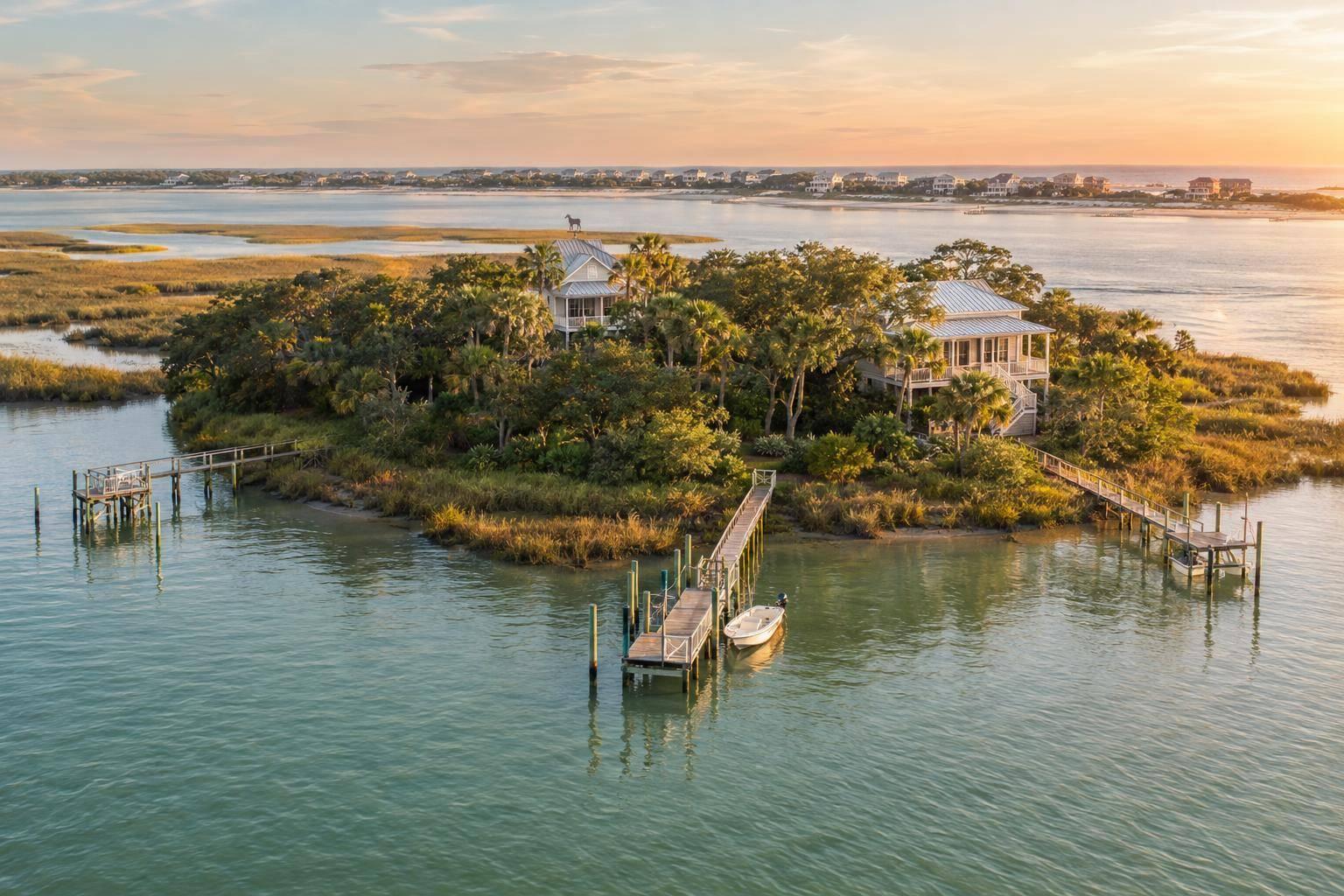
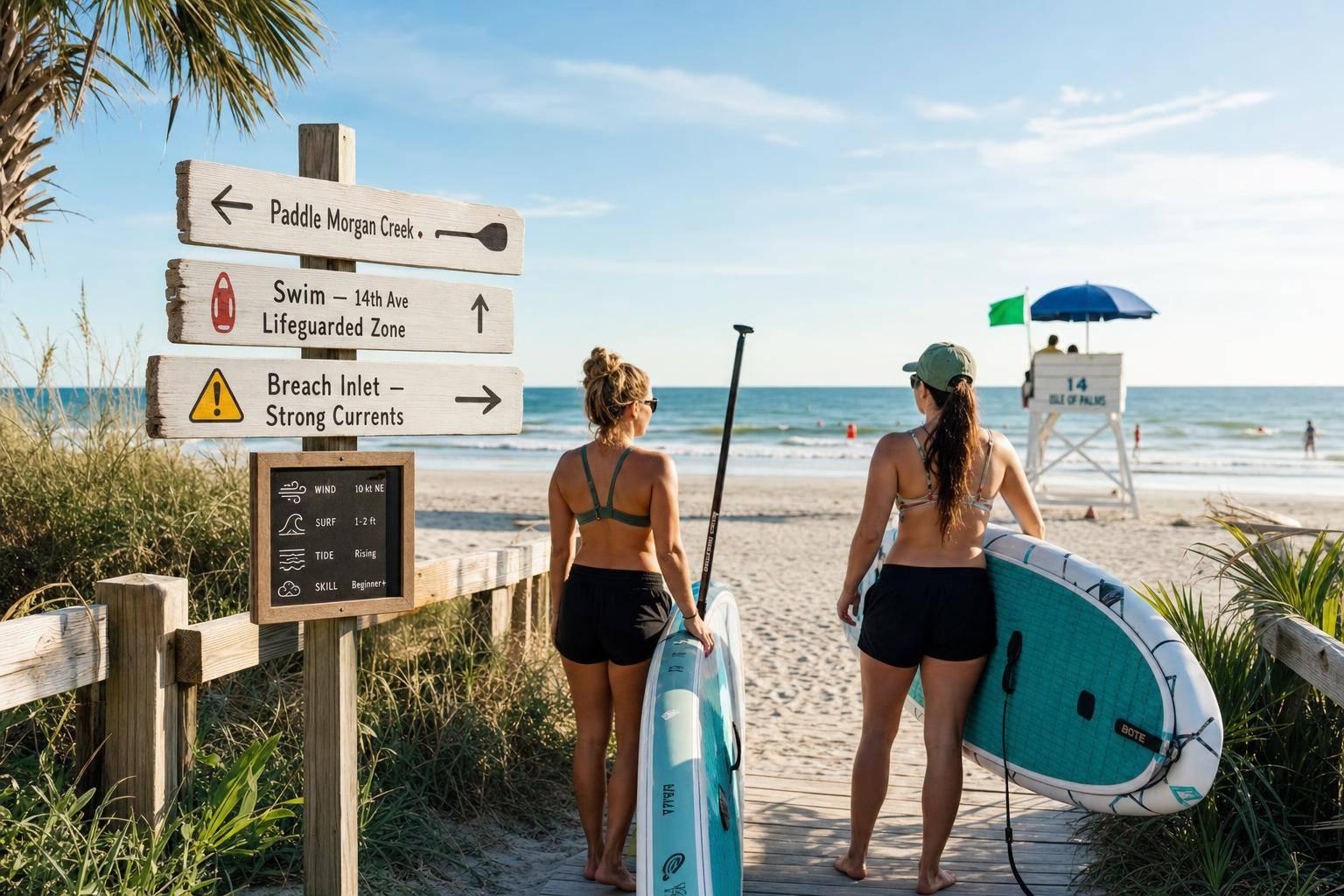
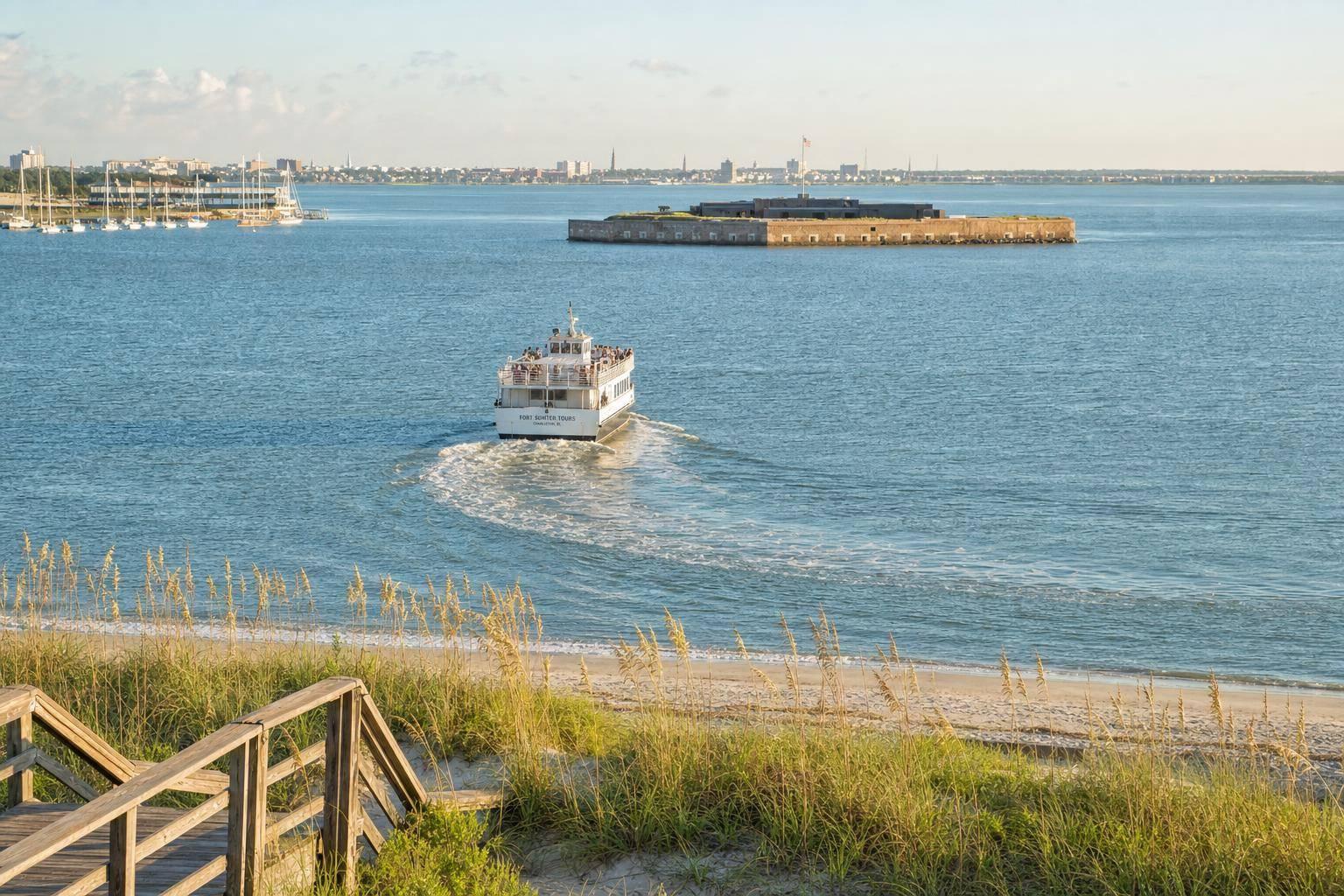
Isle of Palms is a nature lover’s paradise, offering diverse wildlife and habitats that thrive across beaches, salt marshes, and tidal creeks. Whether you’re strolling along the beach or joining a guided eco-tour, you’ll encounter fascinating creatures like loggerhead sea turtles, bottlenose dolphins, and ospreys. Spring and early summer are peak times to witness the island’s vibrant ecosystem, with sea turtle nesting season beginning in May. Conservation initiatives, such as "Beachfront Lights Out", protect these habitats, ensuring future visitors can enjoy them too.
Key highlights include:
- Birdwatching: Spot Least Terns, Plovers, Brown Pelicans, and Great Blue Herons.
- Marine Life: Look out for dolphins, stingrays, and nesting sea turtles.
- Salt Marshes: Discover fiddler crabs, Eastern Box Turtles, and wading birds.
- Native Plants: Maritime Live Oaks and Southern Wax Myrtle provide shade and shelter for wildlife.
For a deeper experience, eco-tours offer guided access to the island’s hidden gems, while nearby Dewees Island and Cape Romain National Wildlife Refuge expand the opportunities for wildlife viewing. Always respect marked trails and nesting areas to help preserve this unique coastal ecosystem.
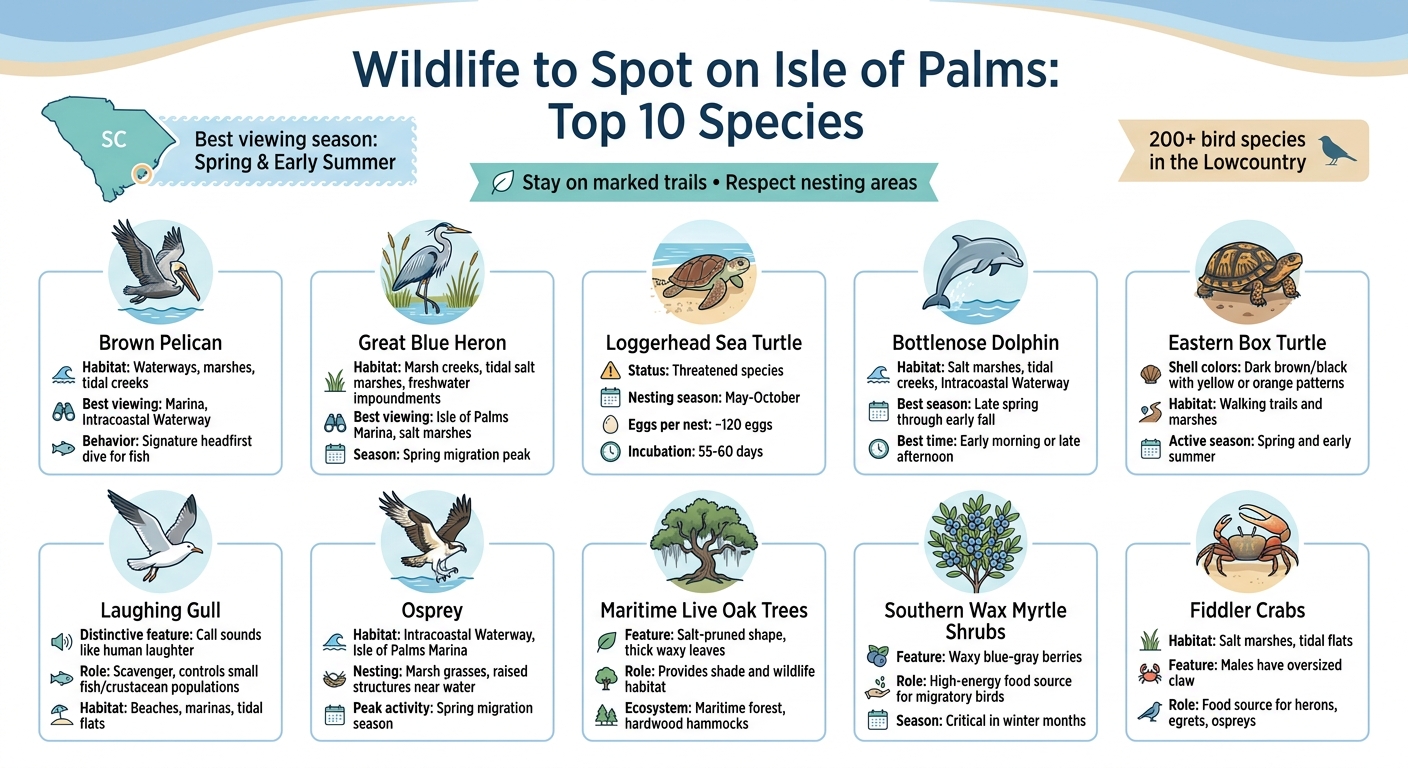
Top 10 Wildlife Species to Spot on Isle of Palms
Birds and Seabirds
The Isle of Palms is a haven for bird enthusiasts, thanks to its location along major migratory routes. Its beaches, salt marshes, and waterways create a mix of habitats that draw an incredible variety of birds throughout the year. From delicate shorebirds to majestic wading birds, there’s always something to see. Among the highlights are the state-threatened Least Terns and Plovers, whose presence adds an extra layer of importance to these migratory stopovers. Overhead, raptors like Ospreys scour the waters in search of fish.
For prime birdwatching, head to the Isle of Palms Marina or the Intracoastal Waterway. Here, you might witness Brown Pelicans plunging into the water or Great Blue Herons patiently stalking their next meal. Ospreys are a common sight as well, whether they’re hunting or nesting nearby. Laughing Gulls contribute their distinctive calls to the coastal ambiance, and during spring migration, the area becomes a temporary home for hundreds of birds taking a break from their arduous journeys. For a quieter experience, consider visiting Dewees Island, accessible by tour boat. This peaceful spot offers a chance to see species like roseate spoonbills, herons, and more ospreys. Just a short trip away, the Cape Romain National Wildlife Refuge adds even more birding opportunities, with its barrier islands providing year-round habitats for a wide range of species.
Whether in bustling marinas or tranquil natural retreats, birdwatchers can enjoy a mix of vibrant and serene experiences. Don’t forget to bring a pair of binoculars and stick to marked trails to ensure the birds and their nesting areas remain undisturbed.
From oystercatchers digging in the sand to marbled godwits and whimbrels searching along the tide line, the Isle of Palms offers unforgettable encounters with the Lowcountry’s fascinating birdlife.
sbb-itb-af832cd
Marine Life and Coastal Animals
Exploring the Isle of Palms isn’t just about scenic views – it’s also a chance to witness the incredible marine life that thrives in its coastal waters. The area is alive with activity, from playful bottlenose dolphins gliding through the Intracoastal Waterway to the quiet beauty of nesting turtles on the beach. During the warmer months, dolphins are a common sight, often seen hunting or socializing in the shallow waters and salt marshes. Early morning or late afternoon beach walks frequently reveal their iconic dorsal fins cutting through the waves.
Between May and October, the beaches become a nesting ground for loggerhead sea turtles. Dedicated efforts by the Isle of Palms Turtle Team help protect these nests, ensuring the hatchlings make it safely to the ocean. This seasonal event adds a special touch to the already vibrant coastal experience.
The waters also host stingrays, the occasional manatee, and a variety of fish like red drum, flounder, and spotted sea trout. These species can often be spotted from boardwalks, adding another layer of excitement to your visit.
For an unforgettable adventure, consider booking an eco-tour with Barrier Island Eco Tours. Their guided dolphin-watching and nature cruises offer a closer look at the local wildlife and provide fascinating insights into the surrounding ecosystem. It’s a chance to connect with the natural world in a way that’s both educational and awe-inspiring.
Native Plants and Vegetation
The Isle of Palms is home to maritime forests and coastal wetlands brimming with native plants that not only enhance the island’s natural beauty but also serve as essential habitats for local wildlife. These plants provide food, shelter, and nesting areas, forming the backbone of the island’s ecosystem.
Maritime Live Oak Trees dominate the coastal canopy. These majestic trees create shaded areas along nature trails, offering a cool retreat from the South Carolina heat for both people and animals. A hallmark of these trees is the Spanish moss draped over their branches, giving the Lowcountry its iconic appearance. Live oak forests occupy the transitional zone between salt marshes and freshwater wetlands, playing a critical role in stabilizing the coastal environment.
Southern Wax Myrtle Shrubs thrive in the understory of the maritime forest, complementing the live oaks. These resilient shrubs are a key resource for wildlife, offering food and nesting sites to various species, including songbirds, wading birds, deer, and bobcats. Alongside other native plants, wax myrtles help sustain the more than 200 bird species that call the Lowcountry home. Interestingly, the highest bird diversity is observed during the winter months.
The island’s landscape also features towering palmetto trees, some of the tallest in South Carolina, as well as mature pines and hardwoods that contribute to the forest canopy. In the wetter zones near tidal creeks, you’ll find bald cypresses and specialized salt marsh grasses that play a dual role: filtering water and providing nesting and hunting grounds for ospreys and herons. When exploring the area, stick to marked trails to protect the delicate root systems of these native plants and minimize disruption to the surrounding habitat.
Marsh and Wetland Animals
The salt marshes and wetlands of Isle of Palms are teeming with wildlife, creating a vibrant ecosystem where freshwater and saltwater meet.
One of the marsh’s most fascinating residents is the fiddler crab. These tiny crustaceans are easy to spot scuttling across the mudflats during low tide, with male fiddler crabs waving their oversized claws in a display that’s hard to miss. If you’re curious to see them up close, local eco-tours, like those offered by Barrier Island Eco Tours, often include crabbing adventures that bring you right into their world. These wetlands provide a perfect complement to the coastal marine life you might encounter elsewhere.
Eastern Box Turtles also make appearances along marsh-edge trails, offering a glimpse into ongoing conservation efforts in the area.
The marshes are also home to larger creatures like stingrays and, occasionally, even manatees. Bird enthusiasts will find plenty to enjoy, as wading birds such as herons, egrets, and roseate spoonbills often nest in the marsh grasses near the Intracoastal Waterway and Dewees Island. For the best chance to observe these birds, consider bringing a pair of binoculars when visiting the Isle of Palms Marina or nearby trails.
To help preserve these delicate habitats, remember to stick to marked trails and keep pets leashed while exploring. These small actions go a long way in protecting the wildlife that calls these wetlands home.
1. Brown Pelican
The Brown Pelican is one of the most recognizable coastal birds you’ll spot on Isle of Palms. These birds are often seen gliding over waterways, marshes, and tidal creeks, making them a highlight of nature walks and eco-tours on the island.
One of the most fascinating things about Brown Pelicans is their hunting style. Watch for their signature dive near the marina or along the Intracoastal Waterway as they plunge headfirst into the water to snag fish. It’s a thrilling sight and happens frequently, especially in spring and early summer when fish are plentiful.
For the best experience, bring binoculars to get a closer look without disturbing them. You can catch these incredible birds in action along trails, near the marina, or even from the beach.
Always remember to keep your distance – never feed or touch the pelicans. Stick to marked trails and designated viewing areas to avoid disturbing their nesting sites. By doing so, you’re helping protect their role as key predators in the Lowcountry’s coastal ecosystem. Up next, discover the elegance of the Great Blue Heron, another gem of Isle of Palms.
2. Great Blue Heron
The Great Blue Heron is a striking wading bird that graces many Isle of Palms hikes. These tall, graceful creatures are often spotted in marsh creeks, tidal salt marshes, and freshwater impoundments around the island, making them a familiar presence during nature walks and eco-tours.
You’ll often see them standing perfectly still in shallow waters, waiting for the right moment to strike at fish, crabs, or small amphibians with lightning speed. Some of the best places to observe these birds include the Isle of Palms Marina, the Intracoastal Waterway, and the surrounding salt marshes, where they both hunt and nest.
For an unforgettable viewing experience, visit during the spring migration season, when the island is alive with activity. Consider joining a guided eco-tour to explore the marshes with an expert who can point out herons and other wildlife.
Don’t forget to bring binoculars! Watching their feeding and nesting habits from a safe distance allows you to appreciate their stunning blue-gray feathers and impressive wingspan without disturbing them. These shy birds thrive in the island’s natural habitats, offering a glimpse into the delicate balance of the local ecosystem.
Stick to marked trails and avoid entering protected nesting areas, such as marsh grasses and cypress swamps, where these colonial nesters gather in groups. While you’re there, keep an eye out for other wildlife, like the endangered Loggerhead Sea Turtles that nest along the beaches.
3. Loggerhead Sea Turtle
The beaches of Isle of Palms are home to one of the most awe-inspiring sights: Loggerhead Sea Turtles. These marine reptiles, classified as threatened, return to the island from May through October to nest. Each female lays around 120 eggs, which incubate for 55–60 days before hatchlings make their way to the ocean, typically between July and October.
If you’re hoping to catch a glimpse of these turtles during your beach walks, patience and care are essential. The Isle of Palms Turtle Team, a group of dedicated local volunteers, marks nesting sites to protect them from harm. Visitors are encouraged to respect these marked areas and avoid disturbing any conservation zones.
"Once you see the struggle these tiny, amazing creatures face trying to make the journey from the dunes to the waves, you’ll want to do whatever you can to make their chances of survival better." – Megan Sexton, Discover South Carolina
To help these turtles overcome the many challenges they face, it’s important to follow simple conservation guidelines during your visit.
If you’re staying in a beachfront property during nesting season, make sure to turn off exterior lights from dusk to dawn and close your blinds. Artificial lighting can confuse hatchlings, which use the moonlight to navigate to the ocean. Avoid using flash photography or shining lights on nesting turtles or hatchlings, as it can further disorient them.
While exploring the beach, be mindful of your surroundings. Fill in large sand holes and remove any outdoor items like beach chairs or toys at the end of the day. These obstacles can trap both adult turtles and hatchlings on their journey to the water. For a closer look, use binoculars or a camera with a zoom lens, and resist the urge to touch or feed these protected animals.
4. Bottlenose Dolphin
Let’s turn our attention to one of the most playful and captivating marine animals: the bottlenose dolphin. These fascinating creatures are a common sight around Isle of Palms, often spotted in the salt marshes, tidal creeks, and the Intracoastal Waterway. While they also inhabit the Atlantic Ocean just offshore, your best chance of seeing them up close is by joining a guided eco-tour departing from the Isle of Palms Marina.
The ideal time for dolphin watching is from late spring through early fall. During these months, the warmer Atlantic waters attract an abundance of food, drawing dolphin pods closer to the shoreline. For the best experience, aim for early morning or late afternoon outings when the water is calmer, making it easier to spot their fins, playful breaches, or the occasional tail slap.
One standout destination for dolphin enthusiasts is Capers Island Heritage Preserve, located about 15 miles north of Charleston. This area offers boat-based dolphin watching tours as well as nature walks along the striking "Boneyard Beach." Eco-tours here are available during the day or at sunset, providing breathtaking opportunities to observe these incredible animals.
"The dolphins came very close to the boat (sometimes right up to the boat) and a beautiful sunset to top it off both times." – Julie H.
When observing dolphins, it’s important to respect their natural habitat. Use binoculars to get a closer look without disturbing them, and avoid feeding or trying to touch these protected animals. For those who prefer a land-based option, the Isle of Palms County Park provides excellent shore-based viewing spots. Occasionally, dolphins venture close enough to the beach to be seen from the shore, offering yet another way to enjoy their beauty while preserving the delicate balance of the local ecosystem.
5. Eastern Box Turtle
The Eastern Box Turtle is a fascinating reptile you might spot while exploring the walking trails and marshes of Isle of Palms. This small, land-dwelling turtle stands out thanks to its domed shell (carapace), which is usually dark brown or black, adorned with striking yellow or orange patterns. What makes it even more special is its hinged bottom shell (plastron), allowing it to completely retract its head, tail, and limbs for protection – a clever defense mechanism against predators.
These turtles are most active during spring and early summer, often seen along coastal trails and marshy areas. They bring a unique terrestrial touch to the island’s diverse wildlife, which already boasts an impressive array of birds and marine species. If you’re interested in exploring these ecosystems further, guided nature tours, like those from Barrier Island Eco Tours, provide a chance to immerse yourself in the region’s natural beauty.
To observe Eastern Box Turtles without disrupting their routine, use binoculars or a zoom lens. For a more peaceful wildlife experience, consider taking a boat tour to nearby Dewees Island, where you can enjoy quiet, unobtrusive viewing of the local fauna.
6. Laughing Gull
The Laughing Gull is a familiar sight along the coast, known for its distinctive call that sounds like human laughter echoing across the beaches and marshlands. These medium-sized gulls can be spotted throughout the year, especially near the shoreline, marinas, and tidal flats.
As natural scavengers, Laughing Gulls play a key role in the ecosystem. They feed on dead fish and organic debris while also helping control populations of small fish, crustaceans, and insects in salt marshes and tidal flats. This makes them an important part of the coastal food web.
Some of the best spots to observe these gulls include areas where they dive for fish or rest among the marsh grasses. Nature trails near the island’s beaches and marshes are excellent for getting a closer look at their habitats. If you’re visiting during the spring migration season, you’ll find even more opportunities for birdwatching in the Lowcountry.
For an up-close experience, consider a guided eco-tour with Barrier Island Eco Tours, which offers sunset cruises and trips through the salt marshes. Bring binoculars to observe the gulls from a safe distance, and always stay on marked trails to avoid disturbing nesting areas. The Laughing Gull’s active, social behavior adds to the rich wildlife experience you’ll encounter on any guided hike.
7. Osprey
The Osprey delivers an unforgettable spectacle as it plunges from the sky into the water to snatch fish. Watching their dramatic hunting techniques is a must for anyone venturing along the island’s trails and waterways.
You can spot ospreys near the Intracoastal Waterway and around the Isle of Palms Marina, where they build nests in marsh grasses or on raised structures close to the water. These areas provide prime viewing opportunities to witness their breathtaking dives. For a more tranquil experience, consider taking a tour boat to Dewees Island, a serene haven well-known for osprey sightings.
During the spring migration season, osprey activity increases across the Lowcountry, making it an ideal time for bird enthusiasts to visit.
Pack your binoculars to observe these birds from a safe distance. For a closer look at nesting areas, try an eco-tour with Barrier Island Eco Tours, which explores the salt marshes while prioritizing the protection of wildlife. Stick to marked trails and avoid disturbing nesting spots to help preserve their habitat.
If you’re into photography, use a zoom lens to capture these birds in action without getting too close. Keep an eye on the waterways – ospreys are often seen diving for fish, adding a thrilling element to any Isle of Palms hiking trip. Their dynamic behavior sets the stage perfectly for discovering the island’s fascinating native flora in the next section.
8. Maritime Live Oak Trees
The Maritime Live Oak (Quercus virginiana) is one of the standout features you’ll notice on hikes through the Isle of Palms. These coastal trees are incredibly well-suited to their environment, with thick, waxy leaves that protect them from the harsh, salty winds. They often take on a "salt-pruned" shape, with their canopies slanting upward away from the ocean. This happens because the salt spray stunts new growth on the windward side. Their sturdy branches and dense structure provide a vital habitat for wildlife, making them an essential part of guided nature walks.
You can easily spot these oaks by the Spanish moss draped over their branches, adding to their coastal charm. Their broad canopies create much-needed shade along trails and are often found in mixed forests alongside pine trees. These trees thrive in maritime forest ecosystems, which are common across the Isle of Palms and nearby islands like Dewees Island – a destination accessible via tour boat.
Maritime Live Oaks are a cornerstone of the coastal ecosystem. They form hardwood hammocks, which are dense, shaded areas that support a wide variety of wildlife. Their sprawling canopies provide shelter and food for countless species, making these areas prime spots for birdwatching. If you’re hiking with binoculars, take a moment to scan the treetops – you might catch sight of birds perched high above, taking advantage of the oaks’ protective branches.
When exploring these forests, it’s important to stick to marked trails to avoid disturbing the delicate ecosystems surrounding these trees. Maritime Live Oaks don’t just support wildlife; they also help stabilize the coastal landscape, playing a key role in local conservation efforts. Their presence is a reminder of the rich biodiversity that thrives on the island.
For a deeper understanding of these iconic trees and other native plants, consider joining an eco-tour with Barrier Island Eco Tours. Their guides are experts in the local environment and can help you appreciate the unique vegetation that defines the Isle of Palms.
9. Southern Wax Myrtle Shrubs
The Southern Wax Myrtle (Myrica cerifera) plays a key role in the island’s maritime forests and coastal areas, thriving in environments exposed to constant salt spray and wind. One of its standout features is the waxy blue-gray berries it produces. These berries are a crucial, high-energy food source for migratory birds during the winter months, a time when other food options are limited.
Efforts by local environmental programs aim to protect native plants like the Southern Wax Myrtle, which are essential to maintaining the balance of coastal ecosystems. If you join a guided nature walk, take the opportunity to ask your guide about how this shrub supports the island’s wildlife. It’s a key player in sustaining the rich marsh life that depends on it.
10. Fiddler Crabs
Fiddler crabs add a lively touch to the marsh’s ecosystem, making them a fascinating part of your Isle of Palms wildlife experience. These tiny crabs thrive in the island’s salt marshes and tidal flats, where they play a key role in the food chain. They provide nourishment for birds like herons, egrets, ospreys, and roseate spoonbills, helping to sustain the area’s rich biodiversity.
You can spot fiddler crabs along walking trails that wind through the marshes and alongside the Intracoastal Waterway. For an up-close encounter, head to Breach Inlet Boat Landing or the Isle of Palms Public Dock. If you’re eager to explore their habitats more deeply, consider joining a guided salt marsh eco-tour, which offers access to less-traveled areas.
Where to Stay: Aerie at 715 Ocean

After a day spent discovering the wildlife of Isle of Palms, Aerie at 715 Ocean offers a perfect retreat, just a short stroll from the beach and nearby nature trails. This vacation rental comfortably accommodates up to 16 guests, making it an excellent choice for families or groups seeking a getaway centered around nature. The spacious outdoor decks are ideal for birdwatching – don’t forget your binoculars to catch glimpses of herons, egrets, or ospreys from the comfort of your own private space. Here, luxury meets adventure in a seamless way.
The rental’s prime location places you right in the heart of the island’s coastal ecosystem, with easy access to salt marshes, scenic walking trails, and a shoreline bustling with activity during nesting season (May through October). During this period, guests can also play a role in local conservation efforts by following wildlife-friendly guidelines.
Aerie at 715 Ocean combines upscale living with nature at your doorstep. Features like a private pool, a fully equipped gourmet kitchen, and optional golf cart rentals provide all the comforts you need. Once you’ve enjoyed the property’s amenities, step out to explore vibrant coastal trails or nearby wildlife habitats. Its close proximity to the Isle of Palms Marina makes it simple to arrange dolphin-watching excursions or salt marsh eco-tours, offering even more ways to connect with the area’s natural beauty. After a day outdoors, unwind with high-speed Wi‑Fi, Smart TVs, and the privacy of multiple en-suite bedrooms – perfect for larger groups.
Throughout your stay, Aerie at 715 Ocean encourages respectful interactions with wildlife. Use binoculars or zoom lenses to observe animals from afar, ensuring their habitats remain undisturbed.
Conclusion
Isle of Palms is a small yet vibrant coastal haven where Atlantic beaches, salt marshes, and the Intracoastal Waterway come together to support an incredible variety of wildlife. From the graceful dives of brown pelicans to the nesting efforts of loggerhead sea turtles, the island showcases the natural beauty and biodiversity of South Carolina’s Lowcountry. Each year, the beaches host numerous sea turtle nests, emphasizing the island’s importance in marine conservation efforts.
"Whether you’re tracking sea turtles or cruising alongside dolphins, Isle of Palms offers an unforgettable chance to connect with nature." – Deserving Vacations
The island’s dedication to conservation is evident in its eco-tours and wildlife protection initiatives. Guided tours, like those offered by Barrier Island Eco Tours, provide respectful ways to observe bottlenose dolphins, stingrays, and even manatees in their natural habitats. For a quieter experience, nearby Dewees Island offers opportunities to see species like roseate spoonbills and herons thriving in untouched coastal areas.
Whether you’re birdwatching at the Isle of Palms Marina, walking along salt marsh trails, or watching fiddler crabs dart across the sand, the island offers countless ways to engage with its wildlife. And with luxury accommodations such as Aerie at 715 Ocean, you can enjoy upscale comforts while staying close to these protected natural areas.
For nature enthusiasts seeking both exploration and relaxation, Isle of Palms is the perfect destination. Consider visiting in spring or early summer, when the ecosystem is at its liveliest. Be sure to practice ethical wildlife viewing by keeping your distance, staying on designated trails, and respecting nesting sites during your adventures.
FAQs
What’s the best time of day to spot dolphins and shorebirds?
The ideal time to catch sight of dolphins and shorebirds on Isle of Palms is during the warmer months. Late afternoon to early evening tends to be the most active period for wildlife, which conveniently aligns with the schedules of many eco-tours and boat cruises.
How can I avoid disturbing sea turtle nests and hatchlings?
To help safeguard sea turtle nests and hatchlings, make sure to turn off outdoor lights near the beach at night. Avoid stepping on marked nests, and always observe from a safe distance. These simple actions play a big role in preserving their natural nesting and hatching process.
What should I bring for wildlife viewing on Isle of Palms hikes?
When heading out for wildlife viewing on Isle of Palms hikes, binoculars are a must-have for spotting birds and marine life in their natural habitats. If you’re planning a nighttime beach walk, pack a flashlight or headlamp – but make sure it has a red filter to avoid disturbing sea turtles. These gentle creatures rely on darkness to safely navigate.
To protect the environment, bring along trash bags to ensure you leave no trace behind. It’s equally important to maintain a safe distance from wildlife to avoid causing stress or harm. And if you’re staying near the beach, turn off outdoor lights at night. This simple action helps sea turtle hatchlings find their way to the ocean without confusion from artificial lighting.