Want to enjoy a beach vacation without leaving behind a trail of waste? This guide is packed with practical tips to help you reduce trash, protect marine life, and make smarter choices while traveling. From packing reusable essentials to choosing reef-safe sunscreen, every small action can help preserve the beauty of coastal ecosystems.
Key Takeaways:
- Pack smart: Use reusable water bottles, food containers, and eco-friendly beach gear.
- Choose reef-safe sunscreen: Opt for mineral-based products to avoid harming marine life.
- Shop local: Support local farmers and seafood vendors to cut down on packaging waste.
- Handle waste responsibly: Follow "Leave No Trace" principles and participate in beach cleanups.
- Stay low-impact: Walk or use golf carts instead of cars to reduce emissions.
Even small changes – like swapping single-use plastics for reusables – can make a big difference. Let’s dive into how you can enjoy a cleaner, greener beach getaway.
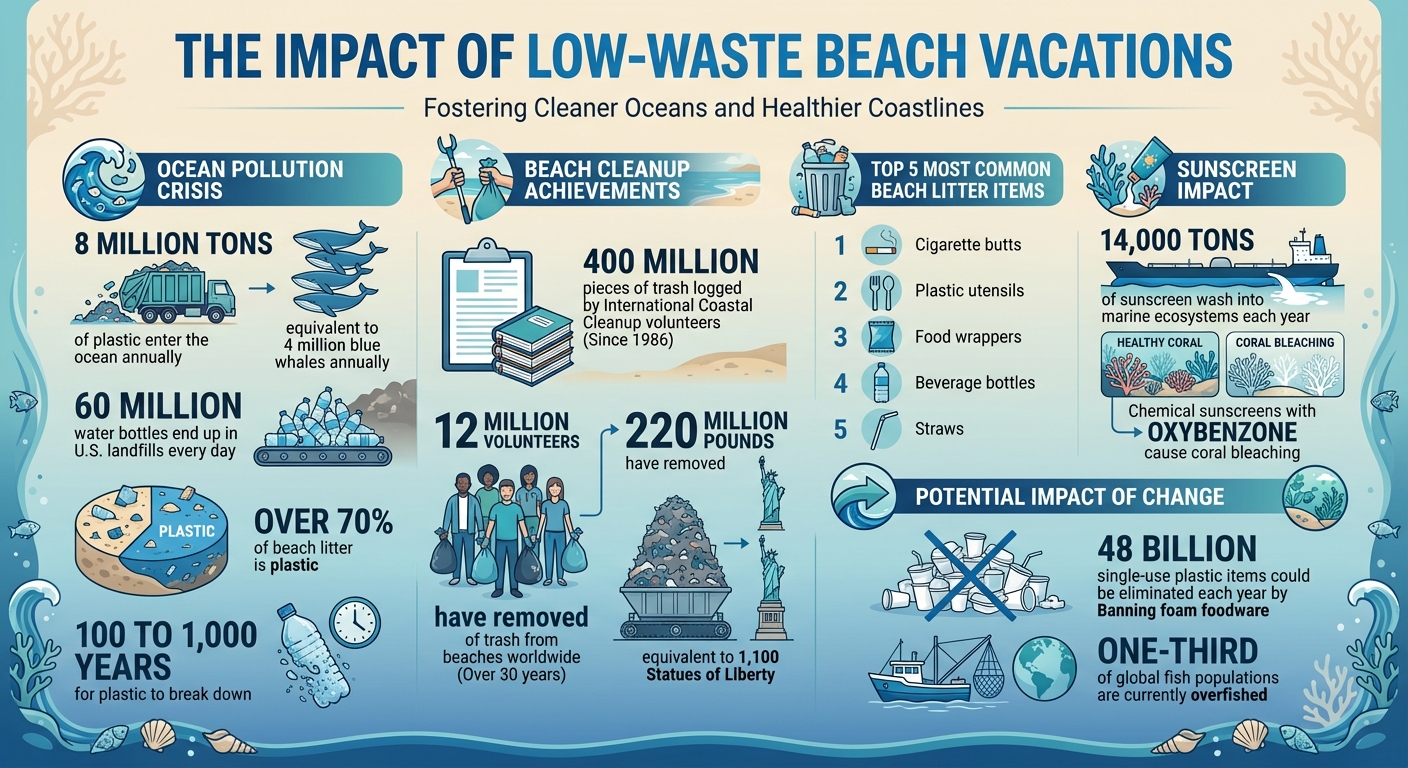
Beach Pollution Statistics and Low-Waste Vacation Impact
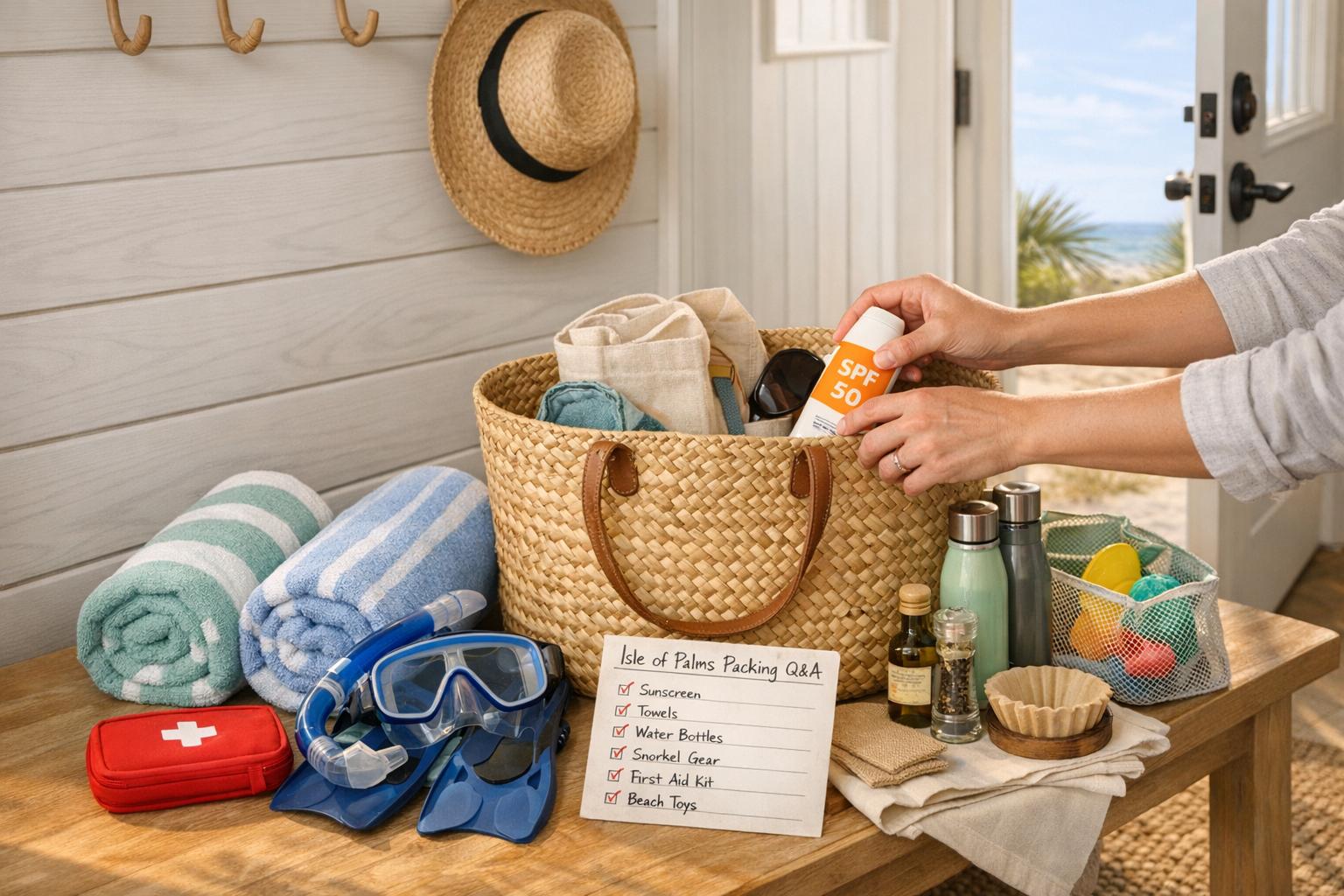
What to Pack for a Low-Waste Beach Trip
Heading to the beach? Packing smart can make a big difference in reducing waste and protecting the environment. By choosing reusable and durable items, you can help preserve the beauty of coastal ecosystems. Let’s dive into some essentials that are both practical and eco-friendly.
Reef-Safe Sunscreen and Skincare Products
Did you know that some sunscreens can harm marine life? Chemical sunscreens with ingredients like oxybenzone and octinoxate are particularly damaging, leading to coral bleaching and disrupting marine ecosystems.
"Sunscreen can actually prevent the corals from getting food from the sun through photosynthesis." – George Leonard, Chief Scientist, Ocean Conservancy
To protect both your skin and the ocean, opt for mineral-based sunscreens with active ingredients like zinc oxide or titanium dioxide. These work by sitting on the surface of your skin and reflecting UV rays, making them safer for marine life. Be cautious with labels – terms like "natural" or "reef safe" aren’t regulated, so double-check the ingredients.
You can also reduce your sunscreen use by wearing UV-protective clothing, rash guards, and wide-brimmed hats. For your toiletries, consider refillable bottles for shampoo and soap, and swap out plastic items for eco-friendly alternatives like bamboo toothbrushes and toothpaste tablets.
Reusable Water Bottles and Food Containers
Single-use plastics are a major contributor to ocean pollution, with around 8 million tons entering the water each year. Combat this by bringing a stainless steel water bottle to keep your drinks cold, along with a travel mug for coffee or smoothies.
When it comes to snacks, ditch plastic wraps and baggies. Instead, pack food in reusable containers, silicone bags, or beeswax wraps. If you’re buying snacks in bulk, store them in reusable containers for the trip. Don’t forget a set of reusable utensils made from stainless steel or bamboo, along with a reusable straw, to avoid disposable cutlery. These small swaps can make a big impact.
Beach Gear That Reduces Waste
Even your beach gear can be eco-conscious. Look for organic cotton or towels made from recycled materials, multipurpose sarongs, and accessories like sunglasses, hats, and sandals crafted from recycled rubber or repurposed yoga mats. If you’re bringing toys for the kids, choose biodegradable or long-lasting non-plastic options. For swimwear, brands like Outerknown offer suits made from recycled materials, and they even provide a program to recycle your suit when it’s worn out.
Lastly, pack a lightweight reusable tote for any shopping and a separate bag to collect your trash – or even litter you find on the beach. This simple habit ensures you leave the shore cleaner than you found it. With these thoughtful choices, you’ll be well on your way to enjoying a low-waste beach adventure.
How to Reduce Waste When Eating at the Beach
Beach trips and food often go hand in hand, but they can also lead to a lot of unnecessary waste. A little planning can go a long way in cutting down on packaging and single-use items.
Buying Local and Fresh Ingredients
One smart way to reduce waste is by shopping local. Farmers’ markets and local seafood vendors often sell fresh produce and seafood with minimal or no packaging. Bring along cloth bags or baskets to carry your purchases. Not only does this cut down on waste, but it also supports local businesses and helps reduce transportation-related emissions.
For seafood lovers, buying directly from local fishermen is another great option. Fish sold at docks or local markets usually comes without the excessive packaging you’d find at grocery stores. If you’re dining out, consider using tools like the Monterey Bay Aquarium Seafood Watch program to make environmentally conscious choices. This is especially important since one-third of global fish populations are currently overfished.
Once you’ve gathered your ingredients, you can focus on preparing meals that avoid single-use plastics altogether.
Preparing Waste-Free Meals and Picnics
Making your own meals is one of the easiest ways to avoid excessive packaging. Instead of grabbing pre-packaged snacks, transfer bulk items like nuts or trail mix into reusable containers. Pack whole fruits or sandwiches in silicone bags or bamboo containers instead of disposable plastic baggies.
"Remember to pack reusable water bottles and choose wrapper-free snacks." – Allyson Shaw, Writer, National Geographic
If you’re staying somewhere like Aerie at 715 Ocean, you’ve got the perfect setup for prepping waste-free meals. The gourmet kitchen offers plenty of counter space, a full-sized refrigerator, and all the tools you need to prepare and store meals in reusable containers. This setup makes it easy to avoid takeout or pre-packaged foods that often come in foam or plastic. For beach picnics, pack your food in insulated cooler bags, bring reusable utensils, and secure a trash bag to keep everything tidy.
With a little effort, you can enjoy your beach meals while leaving a lighter footprint on the environment.
Managing Waste and Recycling at the Beach
When heading to the beach, packing smart and dining waste-free are great first steps, but managing waste responsibly while you’re there is just as important. Even with careful planning, beach outings typically generate some trash. How you handle it can make a big difference in protecting the coastline and preventing pollution, including the growing issue of microplastics.
Sorting and Disposing of Waste Correctly
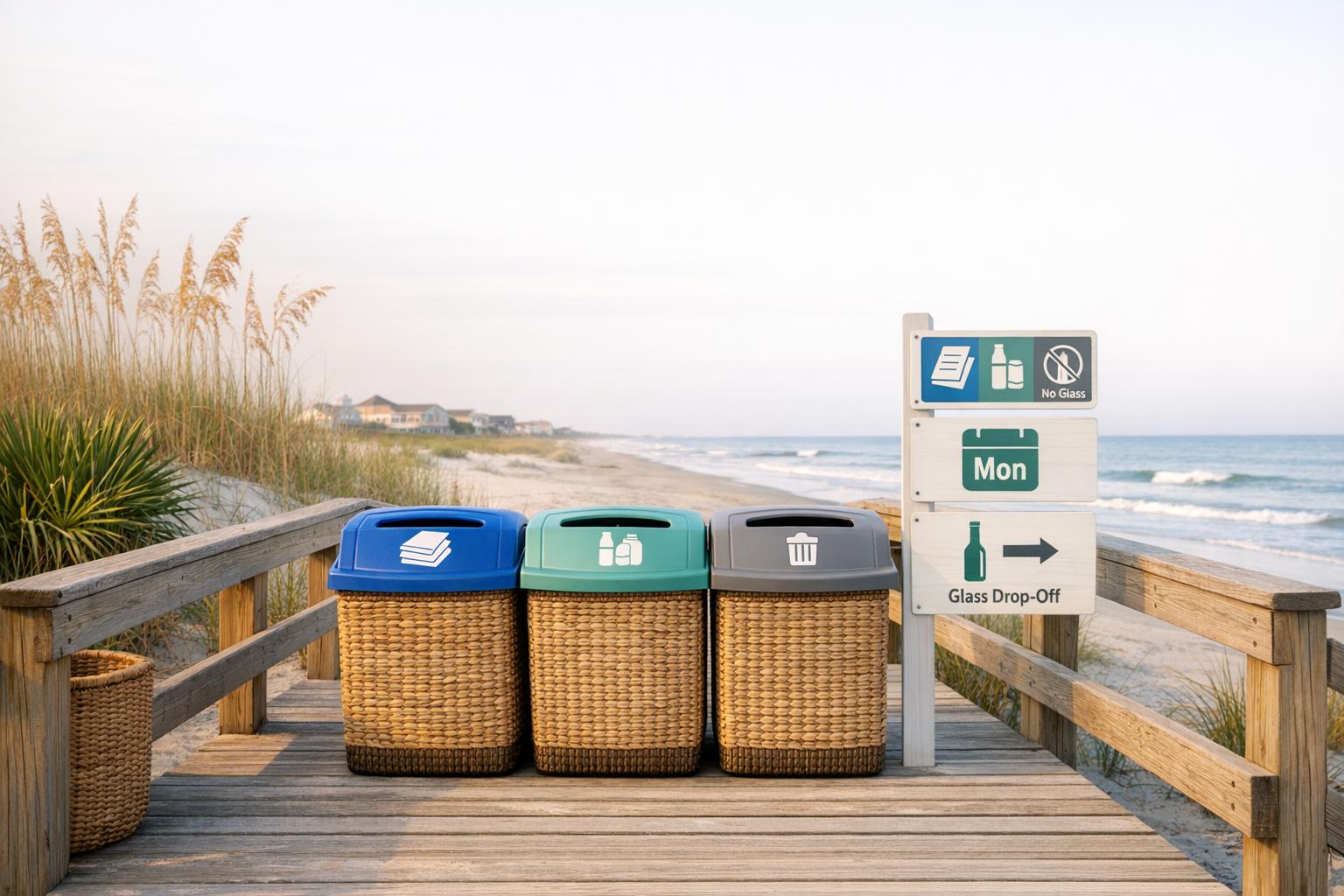
Embrace the "Leave No Trace" philosophy during your beach visit. Use designated recycling bins along the beach pathways whenever possible. If those bins are overflowing or unavailable, bring an extra bag and take your trash home. Leaving litter behind is never an option.
Be mindful of local beach rules. For example, many beaches, like Isle of Palms, ban items such as glass containers, single-use plastic bags, plastic straws, balloons, and Styrofoam coolers or food containers. Smoking and vaping are also increasingly restricted on public beaches to cut down on cigarette butt litter. Since 1986, volunteers with the International Coastal Cleanup have logged nearly 400 million pieces of trash, with cigarette butts, plastic utensils, food wrappers, beverage bottles, and straws among the most common items found.
Separate out items like broken fishing lines and pet waste to prevent harm to marine life and keep water clean. Before you leave, make sure to fill in any sand holes you or your group may have dug. This simple act helps protect other beachgoers and nesting sea turtles.
Joining or Organizing Beach Cleanups
Beach cleanups are a hands-on way to keep coastlines clean and beautiful. Check with your local Parks and Recreation department or organizations like Ocean Conservancy for scheduled cleanup events. Many states also offer "Adopt-A-Beach" programs that welcome volunteers year-round.
If there isn’t a cleanup planned during your visit, why not organize your own? It’s easier than you might think. Start by getting permission from the local parks agency, then rally friends or family through social media. Gather basic supplies like reusable gloves, trash bags or buckets, and a first-aid kit. You can also use the "Clean Swell" app to document the trash you collect, contributing to research on marine debris. Over the past 30 years, more than 12 million volunteers have removed over 220 million pounds of trash from beaches worldwide.
"It’s just like the rule of camping – you should leave the beach in a better condition than you found it." – Kyle Emery, Coastal Ecologist
Preventing Microplastic Pollution
Microplastics – tiny fragments that break off from larger plastic items – are a major threat to marine environments because they’re nearly impossible to remove once they enter the water. One way to combat this is by choosing durable, natural materials for your beach gear and clothing instead of cheap plastics that shed fibers or degrade quickly.
Steer clear of foam food containers, which easily crumble into microplastics. Ocean Conservancy estimates that banning foam foodware could eliminate more than 48 billion single-use plastic items each year, along with countless microplastics. And when your beach trip is over, consider donating bulky items like sand toys or coolers to local charities or other travelers instead of tossing them out.
sbb-itb-af832cd
Low-Waste Practices at Aerie at 715 Ocean

Aerie at 715 Ocean offers a unique vacation experience that combines luxury with eco-conscious living. With its thoughtful design and amenities, this vacation rental makes it easier to stay committed to low-waste habits during your trip.
Cooking Waste-Free Meals in a Fully Stocked Kitchen
The gourmet kitchen at Aerie at 715 Ocean is a game changer for reducing waste. By preparing meals yourself, you can skip the disposable takeout containers and control portions to avoid food waste. Leftovers? No problem – store them in reusable containers instead of reaching for single-use options.
When it’s time to shop, head to Isle of Palms’ local fish markets for fresh, sustainable seafood. Not only does this support local businesses, but it also ensures a fresher meal. For snacks, check out the bulk bins at nearby grocery stores and bring your own reusable bags to cut down on packaging waste.
And here’s a staggering fact: over 60 million water bottles end up in U.S. landfills every day. You can help reduce that number by filling reusable bottles with filtered water from the kitchen. Planning a beach day? Pack your lunches in silicone bags, stainless steel containers, or beeswax wraps – no plastic wrap needed. The kitchen is also equipped to help you whip up bulk snacks and beverages, so you can avoid single-use packaging altogether.
This commitment to sustainability continues outdoors, where Aerie’s amenities encourage mindful practices.
Making the Most of Outdoor Spaces Sustainably
Aerie’s outdoor features, like its private pool, decks, and dining areas, are perfect for enjoying the coastal vibe without creating unnecessary waste. Use reusable dishes and cutlery when grilling or dining outside, and always pack out what you bring to the pool or beach. Why? Because 8 million tons of plastic end up in the ocean annually, and over 70% of beach litter is plastic, which can take 100 to 1,000 years to break down.
Another thing to consider: about 14,000 tons of sunscreen wash into marine ecosystems each year, and chemical sunscreens containing oxybenzone are harmful to coral reefs. Opt for reef-safe sunscreen to protect marine life. Also, let natural "wrack" (like algae and seagrass) stay on the shore – it’s a vital source of nutrients for invertebrates and shorebirds.
"A lot more life lives on a beach’s surface and just below the sand than people are aware of." – Kyle Emery, Coastal Ecologist
By being mindful of these details, you can enjoy Aerie’s outdoor spaces while keeping the environment in mind.
Reducing Car Use with Convenient Beach Access and Golf Carts
Aerie at 715 Ocean makes it easy to lower your carbon footprint with its ideal location. The beach is just steps away, so you can leave the car behind and walk instead. This simple choice reduces emissions from short car trips.
For exploring the island, golf cart rentals are available, offering a low-impact alternative to full-sized vehicles. These low-speed carts are part of the local transit system and are perfect for quick trips to the marina or nearby shops.
Walking or using a golf cart aligns with "leave no trace" principles, minimizing the environmental impact of heavy vehicles on the fragile coastal ecosystem. Plus, choosing a walkable destination like this one is one of the easiest ways to reduce your vacation’s carbon footprint.
Conclusion
Planning a low-waste beach vacation doesn’t mean sacrificing comfort or fun – it’s about making thoughtful choices that help protect the coastlines we cherish. Start with the essentials: pack reusable items to cut down on single-use plastics and opt for reef-safe sunscreen to safeguard marine life. These simple changes can make a big difference in keeping your vacation eco-friendly.
When you’re at the beach, focus on leaving it as pristine as you found it – or even better. Follow the Leave No Trace principles by restoring the area to its natural state before heading home. Resist the urge to collect shells or remove seaweed, as these play a critical role in feeding local wildlife. Coastal ecologist Kyle Emery captures this perfectly:
"It’s just like the rule of camping – you should leave the beach in a better condition than you found it".
Extend your low-waste efforts to your meals. Cooking in a well-equipped kitchen can cut down on takeout packaging, while shopping at local markets and buying in bulk helps reduce food waste. These small adjustments not only reduce your environmental footprint but also support the local community.
Every small step adds up. Even eliminating a few single-use items can prevent large amounts of plastic waste. By taking these mindful actions, you’re contributing to the preservation of coastal ecosystems and ensuring that beaches stay beautiful for generations to come. Your choices today can help secure a cleaner, more vibrant future for these treasured destinations.
FAQs
Why should I use reef-safe sunscreen during a beach vacation?
Using reef-safe sunscreen is an easy way to protect marine ecosystems while shielding your skin from harmful UV rays. Unlike chemical sunscreens that often include ingredients like oxybenzone and octinoxate – known to damage coral reefs and marine life – reef-safe options rely on mineral-based ingredients such as zinc oxide or titanium dioxide. These minerals provide effective sun protection without introducing harmful chemicals into the ocean.
Reef-safe sunscreens play a crucial role in preventing coral bleaching, safeguarding marine animals like sea turtles and dolphins, and reducing the buildup of toxic substances in the ocean’s food chain. In fact, several coastal destinations, including Hawaii and the U.S. Virgin Islands, have banned chemical sunscreens altogether, making reef-safe alternatives not just a responsible choice but sometimes a legal necessity for beachgoers.
By opting for reef-safe sunscreen, you can enjoy your time at the beach while actively contributing to the health of our oceans, helping ensure that coral reefs and marine life continue to thrive for generations to come.
How can I organize or join a beach cleanup during my vacation?
Spending your beach vacation giving back can be incredibly fulfilling, and organizing a beach cleanup is a fantastic way to make a difference. Start by selecting a beach that’s safe and easy to access. Don’t forget to check with local authorities to see if you need any permissions. Planning the event during low tide is a smart move – it makes collecting debris easier and keeps things cooler, especially if you start in the morning.
Make sure you have the right supplies on hand. Reusable trash bags, gloves, and litter pickers are must-haves. If you’re staying at Aerie at 715 Ocean, their outdoor grill area is the perfect spot to gather your supplies and even enjoy some refreshments once the cleanup is done. Invite your friends, family, or even local residents to join in, and spread the word through social media or community bulletin boards to get more helping hands.
On the day of the event, take a few minutes to brief everyone on safety tips and recycling practices. Make sure volunteers know how to separate trash from recyclables. After the cleanup, properly dispose of the collected waste at designated stations. Don’t forget to share your efforts – posting your results can inspire others to help protect our beautiful coastlines. Every little bit counts!
What are the best reusable alternatives to single-use plastics for a beach trip?
For a more eco-friendly beach trip, ditch single-use plastics and go for reusable, long-lasting alternatives. Pack a stainless steel or glass water bottle and a travel mug to avoid disposable bottles and cups. For snacks and meals, bring reusable food containers, cloth tote bags, and bamboo or metal cutlery to skip the need for plastic wrappers or utensils. If you’re sipping on drinks, throw in metal or silicone straws instead of plastic ones.
Planning to bring toys for the kids? Look for biodegradable beach toys crafted from natural materials or plant-based plastics, which break down quicker than regular plastic. Investing in sturdy, long-lasting toys can also cut down on waste over time. Don’t forget to pack reef-safe mineral sunscreen in recyclable or refillable packaging – this helps protect both your skin and the ocean. These simple swaps go a long way in keeping beaches and marine life thriving.