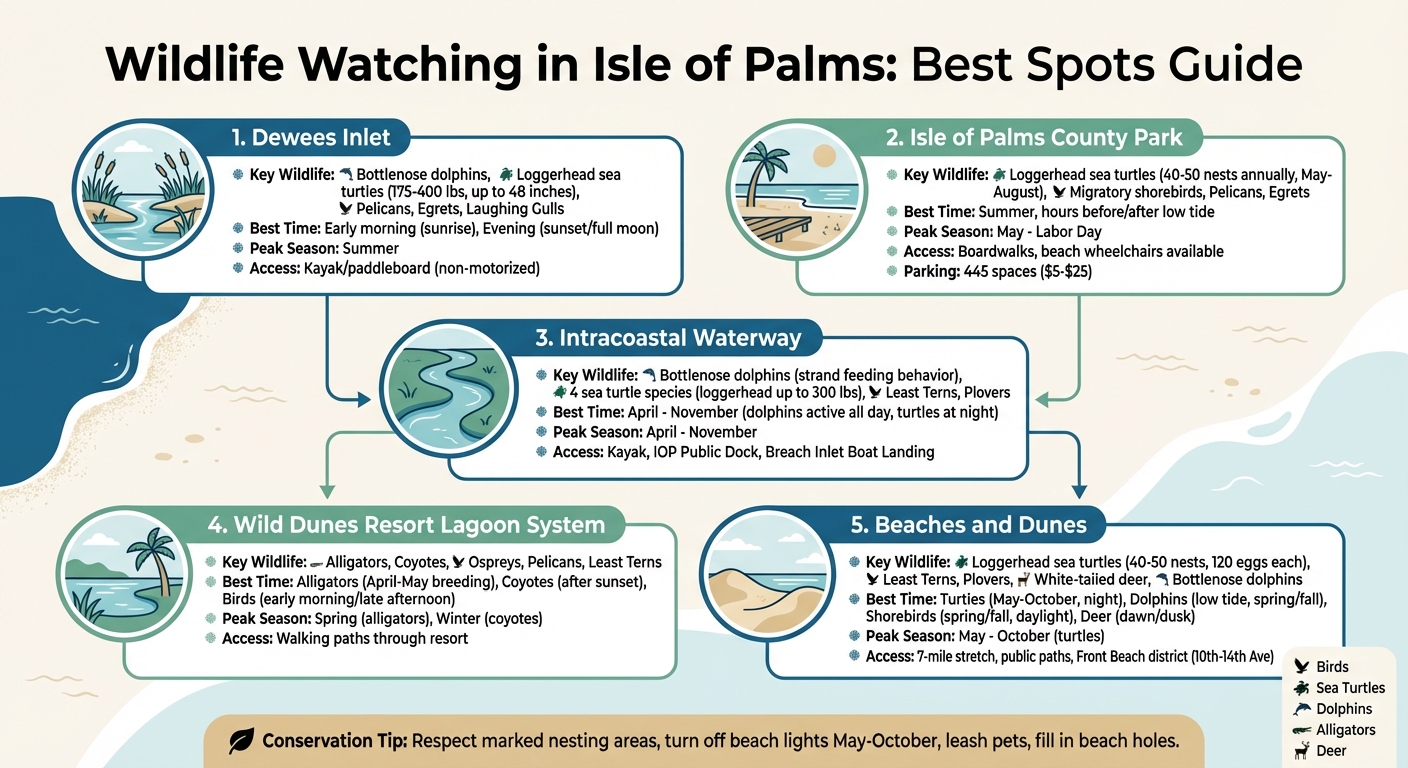
Isle of Palms, located along South Carolina’s coast, is a prime destination for spotting wildlife in their natural habitats. This seven-mile barrier island features beaches, salt marshes, tidal creeks, and maritime forests that support a variety of species, from sea turtles to dolphins. Conservation efforts have helped preserve these ecosystems, making the island a year-round haven for nature enthusiasts.
Key Highlights:
- Sea Turtles: Loggerhead turtles nest from May to October, with 40–50 nests annually.
- Shorebirds: Least Terns and Plovers, both state-threatened, rely on the beaches for nesting and feeding.
- Dolphins: Bottlenose dolphins exhibit strand feeding, a rare hunting behavior.
- Other Wildlife: Alligators, coyotes, pelicans, and deer are commonly spotted.
Best Wildlife Spots:
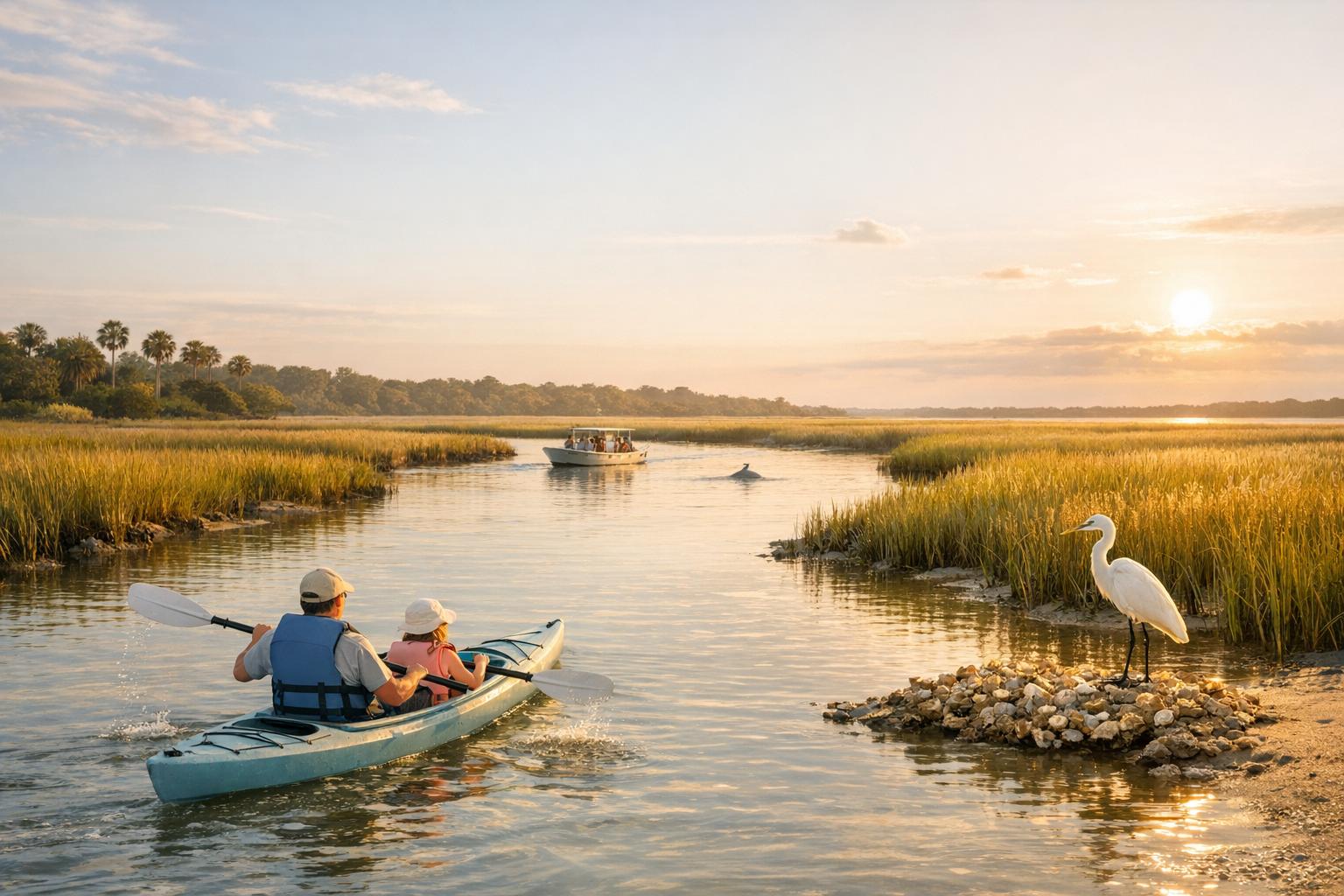
- Dewees Inlet: A mix of salt marshes and tidal creeks, ideal for dolphin and bird watching, especially in the early morning or at sunset.
- Isle of Palms County Park: Accessible boardwalks and ramps make it easy to see nesting turtles and migratory birds.
- Intracoastal Waterway: Active from April to November, with dolphins, sea turtles, and birds frequently visible.
- Wild Dunes Resort Lagoon System: Home to alligators, coyotes, and various birds, with peak activity in spring and winter.
- Beaches and Dunes: Vital habitats for sea turtles and shorebirds, with sightings of dolphins and deer during quieter hours.
Conservation Tips for Visitors:
- Respect marked nesting areas for turtles and birds.
- Turn off beachfront lights during turtle nesting season (May–October).
- Fill in beach holes and leash pets to protect wildlife.
- Avoid walking on dunes to preserve fragile ecosystems.
Isle of Palms offers unforgettable wildlife experiences while prioritizing conservation. Follow these tips to enjoy the island responsibly and help protect its natural beauty.
Isle of Palms Wildlife Watching Guide: Top 5 Locations and Species
1. Dewees Inlet
Located at the northern tip of Isle of Palms, Dewees Inlet serves as a gateway to a stretch of untouched coastline. This area bridges the bustling Wild Dunes resort and the unspoiled barrier islands of Dewees and Capers, creating a fascinating natural environment where salt marshes, tidal creeks, and open waters come together.
Wildlife Diversity
Dewees Inlet is home to an impressive array of wildlife. Visitors might spot bottlenose dolphins, loggerhead sea turtles, pelicans, egrets, laughing gulls, blue crabs, and oysters. Loggerhead sea turtles, for example, can weigh anywhere from 175 to 400 pounds and grow up to 48 inches long. The inlet’s diverse ecosystems support these species, which tend to be particularly active during certain times of the day.
Best Viewing Times
Early mornings at sunrise are perfect for witnessing feeding activity in the salt marshes, while evenings – especially during sunsets or full moons – are ideal for observing flocks of roosting birds. Summer is a particularly lively season, as it coincides with peak migratory and nesting periods. For the best experience, it’s recommended to access the area via water.
Accessibility
While parts of Dewees Inlet can be reached on foot near Wild Dunes, the most rewarding wildlife encounters often require getting out on the water. Kayaking and paddleboarding tours, available through the Isle of Palms Marina, provide a peaceful way to explore the tidal creeks and observe dolphins and birds up close. To protect the sensitive ecosystem, stick to non-motorized transport and avoid marked dune areas, which are nesting grounds for State Threatened species like Least Terns and Plovers.
sbb-itb-af832cd
2. Isle of Palms County Park
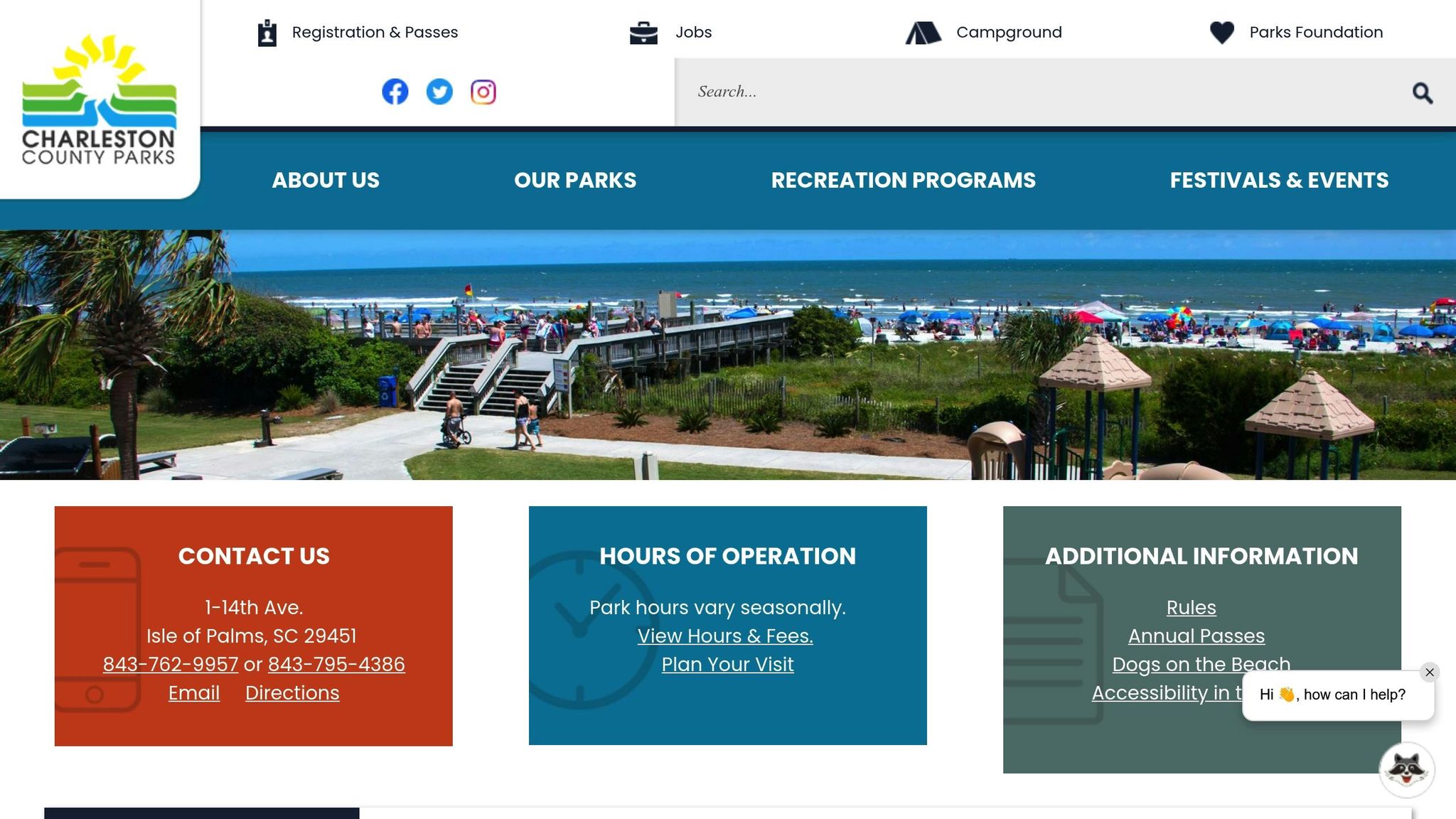
Nestled along the southern shoreline of Isle of Palms, this park is a welcoming spot for nature enthusiasts and families alike. With its easy access and focus on wildlife, Isle of Palms County Park offers a chance to experience the island’s natural beauty up close. Parking is available with 445 spaces, but on weekends, it’s wise to arrive before 10:30 a.m. to secure a spot.
Wildlife Diversity
The park’s shoreline serves as a vital habitat for loggerhead sea turtles, South Carolina’s state reptile. These turtles nest on the beach from May through mid-August, with 40–50 nests forming each summer. Adult loggerheads, which can weigh over 200 pounds, are remarkable creatures – each female may lay eggs up to six times in a single season, with about two weeks between each nesting.
Beyond turtles, the park is a haven for migratory shorebirds during their seasonal travels. These birds rely on the beach and dune systems for rest and nourishment. The surrounding waters and shoreline also teem with marine life, including pelicans, egrets, blue crabs, and oysters, making every visit a chance to spot something special.
Best Viewing Times
For the best wildlife experience, plan your visit during summer and aim for a few hours before or after low tide. This timing increases your chances of seeing nesting sea turtles and migratory shorebirds. The park is open from 9:00 a.m. to sunset from March through October (10:00 a.m. during the winter months). Between May and Labor Day, it stays open later, until 8:00 p.m..
Accessibility
Accessibility is a priority at Isle of Palms County Park. Boardwalks and ramps make it easy for everyone to reach prime viewing spots along the beach. Beach wheelchairs are available free of charge from 8:00 a.m. to 8:00 p.m. on a first-come, first-served basis with a valid photo ID. Parking fees range from $5 in the winter to $25 on summer weekends and holidays, though Gold Pass members enjoy free parking all year.
Conservation Significance
The park plays an important role in protecting its wildlife. Visitors are encouraged to fill in any holes they dig on the beach to safeguard nesting sea turtles and hatchlings. During nesting season, Lights Out protocols are in place from dusk to dawn to minimize disturbances. It’s also crucial to respect marked nesting areas for shorebirds and keep pets leashed to avoid disrupting the animals. To preserve the dunes, visitors should stick to designated boardwalks, as trespassing is prohibited and can result in fines.
3. Intracoastal Waterway
The Intracoastal Waterway and its surrounding salt marshes are a hotspot for wildlife enthusiasts. This intricate network of tidal creeks and inlets provides a crucial habitat for marine creatures and acts as a migratory pathway for various species. You can access this vibrant ecosystem through the Isle of Palms Marina, the IOP Public Dock, or the Breach Inlet Boat Landing.
Wildlife Diversity
This waterway is alive with activity throughout the year, but the best time to visit spans April through November. Bottlenose dolphins are a common sight, often seen navigating tidal creeks and estuaries in search of fish, shrimp, and crabs. Interestingly, the local dolphin population engages in a rare behavior called "strand feeding", where they drive fish onto creek banks to feed.
"The loggerhead, Kemp’s ridley, green and leatherback sea turtles can be found in South Carolina’s near shore waters April through November." – Marine Turtle Conservation Program of the South Carolina Department of Natural Resources
Four species of sea turtles – loggerhead, Kemp’s ridley, green, and leatherback – frequent the waterway during the warmer months. Adult loggerheads, for instance, can weigh up to 300 pounds and grow to four feet in length. Additionally, the marshes serve as resting and feeding grounds for migratory shorebirds such as Least Terns and Plovers, both of which are state-threatened species.
Best Viewing Times
The prime time for observing wildlife along the waterway is between April and November. Dolphins are active throughout the day, patrolling the creeks, while sea turtles are most visible at night during their nesting season, which runs from May to October.
Accessibility
For a closer look at the waterway’s natural wonders, consider exploring by kayak or paddleboard. The IOP Public Dock offers direct access and even hosts educational programs. Boaters can launch from the Breach Inlet Boat Landing, though a fee is required through the city’s payment portal. These facilities not only make exploration easier but also support conservation efforts in the area.
Conservation Significance
The Intracoastal Waterway is at the heart of conservation initiatives. For example, the U.S. Army Corps of Engineers is dredging the waterway and using the sediment for beach restoration rather than discarding it offshore. When observing wildlife, it’s important to maintain a safe distance, especially from dolphins, to avoid collisions that can endanger marine life. Additionally, avoid marked nesting areas for shorebirds, and if you’re on the water at night during turtle hatching season (July–October), turn off lights to prevent disorienting hatchlings.
4. Wild Dunes Resort Lagoon System

The Wild Dunes Resort Lagoon System offers a window into the rich wildlife of the Lowcountry. This network of freshwater lagoons weaves through residential areas and golf courses, creating a natural sanctuary for alligators, coyotes, and a variety of bird species. Guests and property owners can enjoy this wildlife haven by exploring the neighborhood walking paths and shared spaces. Let’s dive into the unique species and behaviors that make this lagoon system stand out.
Wildlife Diversity
The lagoon system supports a thriving population of alligators, carefully monitored each spring by the Wild Dunes Community Association (WDCA). During their breeding season, from April to May, male alligators are especially active as they seek mates. As described by the WDCA:
"Adult males will be moving throughout the community while looking for females. You will see them more frequently and hear them bellowing".
Coyotes are another notable resident, with their breeding season spanning late January through March. They are often spotted near dense vegetation or along the edges of the golf courses. The lagoons also attract an impressive array of bird species, including ospreys, pelicans, and the Least Tern – a species listed as State Threatened.
Best Viewing Times
If you’re hoping to see alligators in action, the months of April and May are ideal, as breeding activity is at its peak. Coyotes tend to be more active after sunset, though they can occasionally be seen during the day in late winter. For birdwatchers and photographers, early morning and late afternoon provide the best lighting and opportunities to observe wildlife along the lagoon’s edges.
Accessibility and Safety
The resort’s walking paths allow for safe and enjoyable wildlife viewing from a distance. To ensure safety, avoid swimming or wading in the lagoons, keep dogs on a leash near the water or dense vegetation, and report any aggressive alligators – particularly those over six feet or repeatedly displaying aggressive behavior – to the WDCA at 843-886-8847.
5. Beaches and Dunes
The Isle of Palms boasts seven miles of picturesque beaches and dunes, offering some of the best opportunities for wildlife observation. These coastal habitats are home to Loggerhead sea turtles – the state reptile of South Carolina – along with Least Terns, a state-threatened species, and various types of Plovers. Additionally, white-tailed deer are often seen along the shoreline during the quieter hours of dawn and dusk. Here’s a closer look at the incredible wildlife and the best times to experience it.
Wildlife Diversity
Each year, Isle of Palms hosts between 40 and 50 sea turtle nests, with each nest containing around 120 eggs. These eggs typically hatch 45–60 days after being laid. Adult Loggerheads, which can weigh over 200 pounds, may nest up to six times in a season, with two-week intervals between each nesting. The beaches also play a vital role for migratory shorebirds, providing essential resting and feeding grounds during their spring and fall migrations.
Another highlight is observing bottlenose dolphins, known for their fascinating strand feeding behavior. During this unique hunting technique, dolphins herd fish onto sandbars, a phenomenon most commonly seen in spring and fall within three hours of low tide.
Best Viewing Times
For those hoping to catch a glimpse of sea turtles, the nesting season runs from May through October, with most activity taking place under the cover of night. If dolphin strand feeding is on your list, plan your visit around low tide during the spring or fall months. Migratory shorebirds are most active during daylight hours in spring and fall, while white-tailed deer are best spotted at dawn and dusk throughout the year. Winter, from December to February, offers a peaceful atmosphere for wildlife observation, especially after high tides or storms.
Conservation Significance
The sand dunes on Isle of Palms are more than just scenic – they act as the island’s natural barrier against coastal storms. These dunes are stabilized by protected sea oats and beach grasses, which also create essential nesting habitats for shorebirds and serve as wildlife corridors for animals like coyotes. Local conservation efforts, such as those by the Island Turtle Team, play a crucial role in monitoring sea turtle nests and helping hatchlings safely reach the ocean. It’s worth noting that disturbing the dunes, sea oats, or littering can result in a $100 fine per offense.
Accessibility
For easy access, head to the Front Beach commercial district between 10th and 14th Avenue, where you’ll find public restrooms and parking. Beach access paths are available along the entire seven-mile stretch, and it’s important to stick to these paths to avoid damaging the delicate dune vegetation. During turtle nesting season (May through October), be sure to turn off beach-facing lights or close blinds at night to prevent disorienting the turtles and their hatchlings. Also, remember to fill in any holes and remove beach equipment by sunset to ensure a clear path for nesting turtles.
6. Stay at Aerie at 715 Ocean for Easy Wildlife Access

Accessibility
Aerie at 715 Ocean, located on Ocean Boulevard, offers unbeatable access to the beach along a stunning 7-mile stretch of coastline. This area is a vital nesting ground for sea turtles and shorebirds, making it a haven for wildlife enthusiasts . Situated near the Front Beach commercial district (10th to 14th Avenue), the property is within walking distance of public restrooms, convenient beach access paths, and the Isle of Palms County Park, which features accessible boardwalks and ramps. Nearby parking facilities ensure you can enjoy the area with ease .
This vacation rental accommodates up to 16 guests and even offers on-site golf cart rentals. With this added convenience, you can explore the island’s wildlife hotspots without the hassle of finding parking or dealing with traffic. It’s the perfect base for leisurely wildlife adventures.
Best Viewing Times
Thanks to its prime spot, Aerie at 715 Ocean makes it easy to enjoy wildlife during peak activity hours. Sea turtle nesting season runs from May through October, with nesting typically occurring at night. Hatchlings begin to emerge 45 to 60 days after the eggs are laid. To observe responsibly, remember to close beach-facing blinds and turn off outdoor lights to avoid confusing nesting turtles or hatchlings.
The property is also close to Breach Inlet and the Intracoastal Waterway, making it an ideal starting point for boat trips to Cape Romain National Wildlife Refuge and Capers Island State Park. These destinations offer the chance to explore untouched maritime forests and pristine beaches. Whether you’re an early bird aiming to spot migratory shorebirds in spring and fall or prefer evening walks to witness turtle nesting, Aerie at 715 Ocean places you right in the heart of Isle of Palms’ incredible wildlife experiences.
Conservation Efforts and Responsible Wildlife Watching
The Isle of Palms is home to a variety of wildlife, and several conservation programs work tirelessly to protect these species. The city enforces wildlife protection policies through initiatives led by groups like the Environmental Advisory Committee (EAC), which advises the City Council on environmental conservation and sustainability efforts. One standout program is the Sea Turtle Protection Program, which safeguards Loggerhead sea turtles through measures like "Beachfront Lights Out" rules, nest monitoring, and habitat preservation.
Efforts also extend to protecting migratory and nesting shorebirds, such as the state-threatened Least Terns and Plovers. The city designates nesting areas and enforces leash laws to minimize disturbances to these birds. Additionally, the Isle of Palms City Council adopted the Coyote Management Plan, which educates the public and allows professional trappers to manage coyotes on public property. These initiatives aim to ensure that wildlife and visitors can coexist responsibly on the island.
For visitors, there are a few simple but important steps to follow. During turtle nesting season, turn off beach-facing lights or close blinds after dark to prevent disorienting the turtles. If you come across a nesting turtle or hatchlings, observe quietly from a distance and avoid using flashlights or flash photography.
When shorebirds are present, keep pets leashed and steer clear of flocks to avoid disturbing them. To discourage coyotes, never feed them and secure your trash. If a coyote approaches, use "hazing" techniques like making loud noises or waving your arms to encourage it to leave. Stick to designated beach access paths to protect fragile sand dunes and sea oats, which are essential for preventing beach erosion.
To reduce marine debris, Isle of Palms has banned single-use plastic bags, plastic straws, Styrofoam, and balloons on the beach. Violators face a $100 fine per offense. If you find an injured or dead sea turtle, report it to the IOP Police at 843-886-6522 or the South Carolina Department of Natural Resources at 1-800-922-5431. For those who want to get involved, consider joining the Isle of Palms Beach Cleanup Crew or participating in the Adopt-A-Beach program to support coastal preservation.
Conclusion
Isle of Palms offers seven miles of stunning beaches teeming with wildlife along South Carolina’s coast. From the dynamic habitats of Dewees Inlet to the peaceful shores lining the Intracoastal Waterway, the island provides unique opportunities to witness coastal creatures like loggerhead sea turtles and migratory shorebirds thriving in their natural environments.
Thanks to ongoing conservation efforts and dedicated volunteers, these species are protected throughout the year. If you visit, remember to fill in any holes you dig on the beach, keep beachfront lights off during nesting season (May to October), and leash your pets near bird flocks. These small actions help preserve the island’s delicate ecosystem, ensuring your experience at Aerie at 715 Ocean not only feels luxurious but also deeply connected to nature.
Whether it’s watching hatchling turtles emerge at sunrise or catching sight of shorebirds as the day winds down, Isle of Palms provides unforgettable wildlife moments. Situated just steps from the beach, Aerie at 715 Ocean combines easy access to these experiences with accommodations that are perfect for families and groups alike.
FAQs
When is the best time to see sea turtles nesting on Isle of Palms?
The best time to see sea turtles nesting on Isle of Palms is from May through October, with the peak activity happening in June and July. During these warmer months, loggerhead sea turtles make their way onto the beach at night to lay their eggs – a truly special and unforgettable sight.
If you’re planning to watch, be sure to respect conservation rules designed to protect these endangered animals. Stay back, avoid using flashlights or camera flashes, and keep noise to a minimum to ensure the turtles remain undisturbed. It’s an incredible chance to experience nature while contributing to important conservation efforts.
What can visitors do to help protect wildlife on Isle of Palms?
Visitors to Isle of Palms can help protect the island’s wildlife by following a few simple yet impactful steps. During sea turtle nesting season, keep beachfront lights turned off at night – bright lights can disorient both nesting turtles and hatchlings. At the end of your beach day, be sure to remove all trash, beach chairs, and umbrellas to avoid creating obstacles for wildlife. And don’t forget to fill in any sand holes, as these can trap turtles or their hatchlings.
Another way to contribute is by supporting local conservation efforts, such as the Island Turtle Team, which works tirelessly to safeguard turtles and their nests. Additionally, respecting local rules about littering and pollution is essential for preserving the island’s natural environment. These small actions go a long way in ensuring that Isle of Palms remains a safe haven for its wildlife for years to come.
What wildlife behaviors can you observe at Dewees Inlet?
Dewees Inlet offers an incredible chance to witness wildlife in their natural surroundings. On warm days, you’re likely to spot alligators lounging along pond edges or near roadsides, soaking up the sun. These powerful predators aren’t just impressive to watch – they’re also crucial to the ecosystem, keeping populations of smaller animals like rodents and raccoons in check.
For bird enthusiasts, the inlet is a haven. Grab a pair of binoculars and look out for wading birds, shorebirds, and other species busy with foraging or nesting. If you visit between May and mid-August, you might even catch a glimpse of loggerhead sea turtles during their nesting season. Female turtles come ashore under the cover of night to lay their eggs, and weeks later, tiny hatchlings make their determined journey to the ocean. Thanks to conservation groups like the Isle of Palms Turtle Team, these moments remain protected and unforgettable for those lucky enough to experience them.