A beach first aid kit should do four jobs: treat cuts, handle sun and heat, deal with stings, and keep emergency info close. A standard home kit often falls short on sand, salt air, wet skin, and heat. For a family beach day, I’d pack a small beach-bag kit for fast care and a larger refill kit indoors.
Here’s the short version:
- For cuts and scrapes: waterproof bandages, antiseptic spray, sterile gauze, gloves, and blister pads
- For sand and splinters: sterile saline vials and fine-tip tweezers
- For bumps and strains: an elastic bandage and instant cold packs
- For sun and heat: SPF 30+ sunscreen, SPF lip balm, zinc oxide, aloe vera gel, and 1% hydrocortisone cream
- For hydration: about 1 liter of water per person per hour in the sun, plus electrolyte packets
- For allergies and day-to-day meds: kid- and adult-safe pain relievers, antihistamines, inhalers, and EpiPens stored out of direct sun
- For stings and bites: sting-relief gel, insect repellent, gloves, tweezers, and a flat plastic card for jellyfish tentacles
- For emergencies: a CPR face shield, whistle, flashlight, foil blanket, and a waterproof medical info card
- For heat danger: a body temperature above 104°F is a medical emergency
A simple setup works best: keep the fast-use items in your beach bag, and store extra bandages, saline, sunscreen, meds, and refill supplies at your rental or in your car. That way, you’re ready for the common beach problems without dragging a bulky kit across the sand.
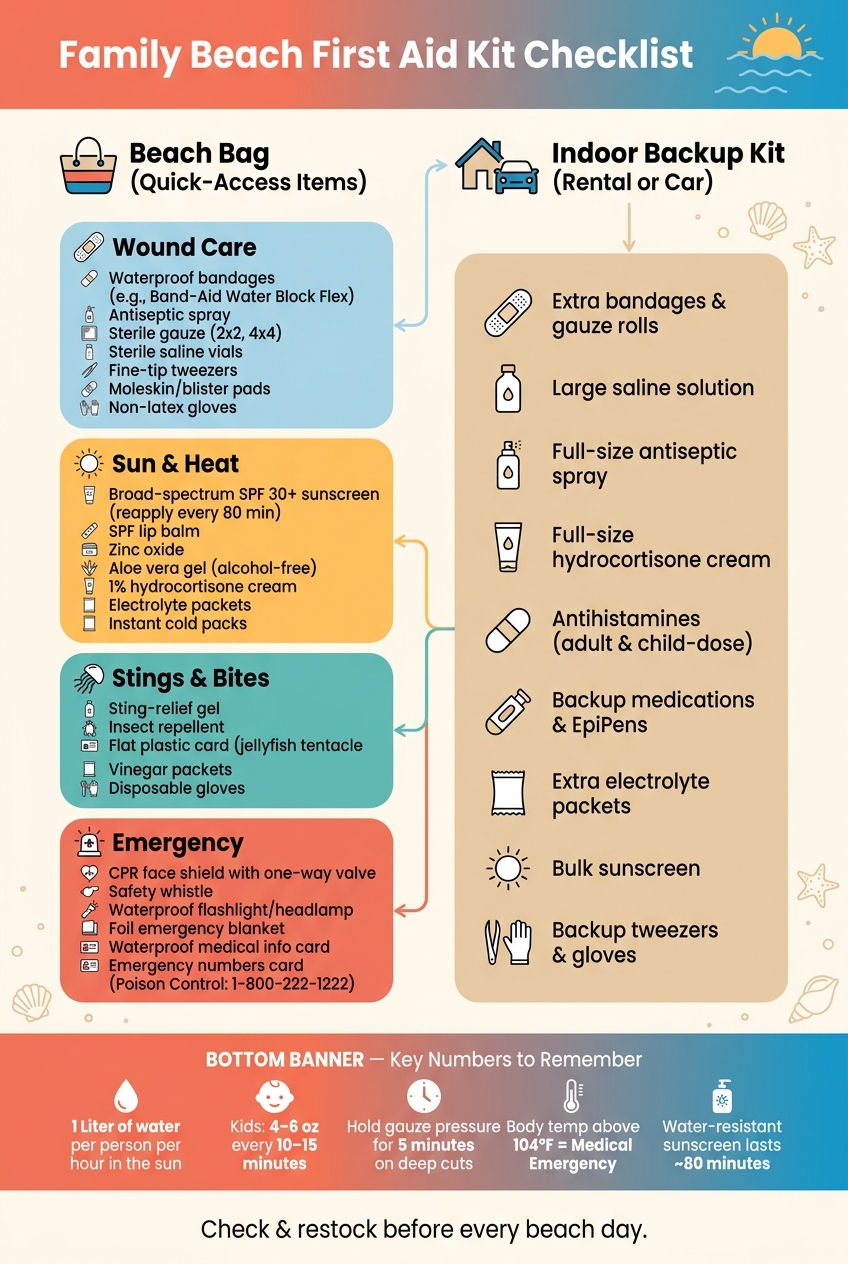
Family Beach First Aid Kit Checklist: What to Pack & Where
Core Wound Care and Injury Supplies to Pack
Salt water, wet sand, and heat can make a small cut feel like a much bigger deal. That’s why these injury supplies should go in your beach bag early, not as an afterthought.
Wound Care for Cuts, Scrapes, and Blisters
Regular bandages don’t hold up well at the beach. They tend to peel off once skin gets wet or sandy. Waterproof bandages, such as Band-Aid Water Block Flex, are made to stick on wet skin and help keep out sand and saltwater. For kids, flexible waterproof bandages are handy on knees, elbows, and heels, where bandages often loosen first.
When you need to clean a sandy cut, an antiseptic spray works better than wipes. It lets you clean the area without rubbing grit deeper into the skin. After that, put on a thin layer of antibiotic ointment and cover the spot with a waterproof bandage. If the cut is deeper, press sterile gauze over it for 5 minutes without lifting to check too soon.
Moleskin or blister pads can help stop trouble before it starts. They protect feet from hot sand and rubbing from wet sandal straps before a blister forms. It also helps to pack non-latex gloves so you can treat someone else’s wound without direct contact.
Next, pack the items that help with twists, bumps, and swelling.
Sprains, Bumps, and Minor Swelling
Soft sand and uneven dunes can be rough on ankles and knees. An elastic (Ace) bandage can give compression and support for a twisted ankle or knee until you can get proper care. Toss in small scissors and a few safety pins too, since wraps sometimes need a quick adjustment.
Instant cold packs are useful for bumps and minor swelling, and they don’t need a cooler.
Eye, Splinter, and Sand Irritation Items
If sand gets into someone’s eyes, flush it out with single-use sterile saline vials. They stay sterile until you open them, take up very little space, and are a safer pick than bottled drinking water, which is not sterile and may bring in bacteria.
For splinters from driftwood, worn boardwalks, shell fragments, or sea urchin spines, bring fine-tip stainless steel tweezers. After use, rinse the tweezers with fresh water.
| Supply | Beach Use Case | Key Tip |
|---|---|---|
| Waterproof bandages | Shell cuts, scraped knees, sandal blisters | Flexible versions work well on joints |
| Antiseptic spray | Sandy wounds, coral scrapes | No-touch application avoids grinding grit in |
| Sterile gauze (2×2, 4×4) | Deeper cuts, bleeding control | Hold firm pressure until bleeding slows |
| Elastic bandage | Twisted ankles, knee support | Secure with safety pins if needed |
| Instant cold packs | Bumps and minor swelling | Use without a cooler |
| Sterile saline vials | Sand in eyes, wound irrigation | Single-use keeps solution sterile |
| Fine-tip tweezers | Splinters, shell fragments, sea urchin spines | Rinse with fresh water after use |
| Moleskin/blister pads | Hot sand, wet sandal friction | Apply before a blister forms |
sbb-itb-af832cd
Sun, Heat, Hydration, and Medication Supplies
After cuts and scrapes, the next thing to handle is sun and heat. At the beach, those two can turn a fun day into a rough one fast.
Sunburn and Skin Protection Supplies
Pack a broad-spectrum SPF 30+ sunscreen with a water-resistant formula. Water-resistant sunscreen holds up for about 80 minutes in the water, so put more on after swimming or heavy sweating. It also helps to apply it before you leave home, so it has time to settle in before sun exposure starts.
Bring zinc oxide for the nose, ears, and lips. It forms a physical barrier and won’t sting near minor cuts. Add SPF lip balm too, since lips burn more easily than people think. A bottle of pure aloe vera gel in the cooler can feel great on overheated or sunburned skin. Skip after-sun products with fragrance or alcohol. Pack 1% hydrocortisone cream for itchy rashes or mild skin inflammation.
Hydration and Heat Support Items
Water matters just as much as sunscreen. Plan for about 1 liter of water per person per hour in the sun. For kids, aim for 4–6 ounces every 10–15 minutes. That may sound like a lot, but beach heat sneaks up on people.
Pack electrolyte packets like Liquid IV or Pedialyte to replace sodium and potassium lost through sweat. If someone starts getting too hot, use instant cold packs or wet towels on the neck, armpits, wrists, or groin. A foil emergency blanket is also worth packing for shock or sudden temperature changes.
Medications for Adults, Kids, and Known Conditions
Before you head out, pack medicines for pain, allergies, and any condition your family already manages. Bring age-appropriate acetaminophen and ibuprofen for pain or fever. Pack an antihistamine for hives, bites, or mild allergic reactions. Those come up a lot at the beach because of sun, insects, and marine life.
Keep EpiPens and inhalers in a protective case and out of direct sun. And yes, check expiration dates before every beach trip. It’s easy to forget until the one time you need them.
| Supply | Purpose | Key Tip |
|---|---|---|
| Broad-spectrum SPF 30+ sunscreen | UVA/UVB protection | Reapply after swimming or heavy sweating |
| SPF lip balm | Protects lips from sun exposure | Keep handy for frequent reapplication |
| Zinc oxide | Nose, ears, and lips protection | Won’t sting near minor cuts |
| Aloe vera gel (alcohol-free) | Soothes sunburned skin | Store in the cooler for extra relief |
| 1% hydrocortisone cream | Itchy rashes and skin inflammation | Helps calm irritated skin |
| Electrolyte packets | Replace sodium and potassium lost through sweat | Mix into water after extended sun exposure |
| Instant cold packs | Cool pulse points during overheating | Apply to the neck, armpits, wrists, or groin |
| Foil emergency blanket | Body temperature management | Compact enough to fit in a beach bag |
| Acetaminophen/ibuprofen | Pain or fever | Pack age-appropriate doses for each family member |
| Antihistamine (Benadryl) | Hives, bites, or mild allergic reactions | Helpful for beach-related skin reactions |
Beach-Specific Items for Stings, Bites, and Marine Hazards
After sun and heat, the water brings a different set of problems. Jellyfish stings, sand flies, sea urchin spines, and sand getting into cuts are all common beach issues. That’s why a family beach kit should include a few supplies made for these situations.
Insect Bite and Sting Relief Supplies
Bring insect repellent for mosquitoes and sand flies, 1% hydrocortisone, a sting-relief gel, and a child-dose antihistamine. For kids, use child-dose liquid antihistamines.
Marine-Life and Sand-Contaminated Wound Supplies
Don’t rinse wounds with ocean water. If someone gets stung by a jellyfish, use a flat plastic card to gently lift away tentacles. Do not rub the area. Vinegar may help with some jellyfish stings, but use it only if local beach guidance says to do so. Follow posted beach flags and any direction from lifeguards.
Fine-tip tweezers are a must for pulling out sea urchin spines, shell pieces, or splinters from old boardwalks or driftwood. Disposable gloves help keep things clean for the person giving care.
How to Split Supplies Between the Beach Bag and the Rental
Use two kits. Keep the quick-use items with you on the sand, and leave the larger backup supplies indoors. The beach pouch should hold only grab-fast items.
Store the larger backup kit inside your rental. Families staying at Aerie at 715 Ocean can keep bulk saline, extra bandages, full-size hydrocortisone, antihistamines, and backup medications indoors. Before each beach trip, restock the pouch.
| Supply Category | Beach Bag | Indoor Backup |
|---|---|---|
| Wound care | Waterproof bandages, saline vials, antiseptic spray | Large gauze rolls, medical tape, extra antiseptic spray |
| Sting and bite relief | Vinegar packets, flat plastic card, sting-relief gel | Large bottle of vinegar, hydrocortisone cream, antihistamine |
| Marine debris removal | Fine-tip tweezers, disposable gloves | Backup tweezers, extra gloves |
CPR Gear, Emergency Information, and Final Family Checklist
CPR and Breathing Emergency Items
After you’ve packed supplies for cuts, sun, and stings, add a few items for the rare moments you hope never happen.
Pack a CPR face shield or mask with a one-way valve and non-latex disposable gloves. Keep these fast-response items in the beach bag, not back at the rental. A waterproof container or dry bag is your best bet. Drowning can happen quietly and fast, so rescue gear should stay within arm’s reach. It also helps if at least one adult is up to date on CPR and first aid.
Keep a waterproof or laminated medical information card in the beach bag with each family member’s full name, known medical conditions, allergies, current medications with dosages, and emergency contacts.
Emergency Preparedness Tools for Serious Situations
Pack a high-decibel safety whistle that can cut through surf noise. Clip it right to the bag or a lanyard so you don’t have to dig for it.
Add a waterproof flashlight or headlamp, along with the foil blanket already in your kit, in case of shock or hypothermia. Keep a waterproof list of emergency numbers in the kit too. Include the local beach patrol or Coast Guard station, 911, Poison Control at 1-800-222-1222, and the nearest hospital and urgent care center. If you’re staying at Aerie at 715 Ocean, write down the home’s exact address and the exact beach access point or landmark as well.
Conclusion: The Family Beach First Aid Checklist at a Glance
Use the table below as a final check before you head out.
| Category | Key Supplies | Where to Keep It |
|---|---|---|
| CPR and breathing | CPR face shield or mask with a one-way valve, non-latex disposable gloves | Beach bag |
| Emergency tools | Safety whistle, waterproof flashlight or headlamp, emergency foil blanket | Beach bag |
| Emergency information | Waterproof or laminated medical information card, written emergency numbers, rental address, beach access point | Beach bag |
| Backup supplies | Extra bandages, saline, sunscreen, meds, and electrolyte packets | Rental or vehicle |
Label the kit, size it for your group, and check it before every beach day.
FAQs
What should stay in the beach bag versus the car or rental?
Keep your main first aid kit with you on the beach in a portable, waterproof bag or dry sack so you can grab it fast when you need it.
For a family of four, it can help to split supplies into two kits:
- one for urgent first aid
- one for hydration and cooling gear, kept close by in the shade
You can leave bulkier items or backup supplies in the car trunk or at your rental, such as Aerie at 715 Ocean, for minor injuries you handle after coming back from the sand.
How do I know if heat exhaustion is becoming an emergency?
Heat exhaustion turns into an emergency if it moves into heatstroke. At that point, the body can’t control its temperature anymore.
Call 911 right away if the person becomes unresponsive, stops breathing, or collapses. Mild dehydration signs like fatigue, dizziness, irritability, or dry lips can often be handled with shade, cooling the skin, and electrolyte drinks.
But if the person collapses, this is no longer something to watch at home. They need medical help immediately.
What is the safest first step for jellyfish stings or sea urchin spines?
For jellyfish stings, carefully remove any tentacles still stuck to the skin with a card or tweezers. Don’t rub the area, because that can make things worse. To ease pain, place the affected area in hot water.
For sea urchin spines, use tweezers to carefully pull the spines out of the skin.