A day at the beach can be fun, but it comes with risks like sunburn, cuts, jellyfish stings, and sand irritation. A waterproof first aid kit is key to handling these situations quickly and effectively. Here’s what you’ll need:
- Wound Care: Waterproof bandages, sterile gauze, antiseptic wipes, antibiotic ointment, tweezers, and scissors.
- Skin Protection: Sunscreen (SPF 30+), SPF lip balm, aloe vera gel, and hydrocortisone cream.
- Medications: Pain relievers (ibuprofen, acetaminophen), antihistamines, EpiPens for severe allergies, and personal prescriptions.
- Beach-Specific Tools: Disposable gloves, hand sanitizer, instant cold packs, saline solution, and blister pads.
- Organization: Use waterproof containers and check expiration dates regularly.
Preparation ensures minor issues don’t ruin your beach day. Keep your kit accessible and ready for action.
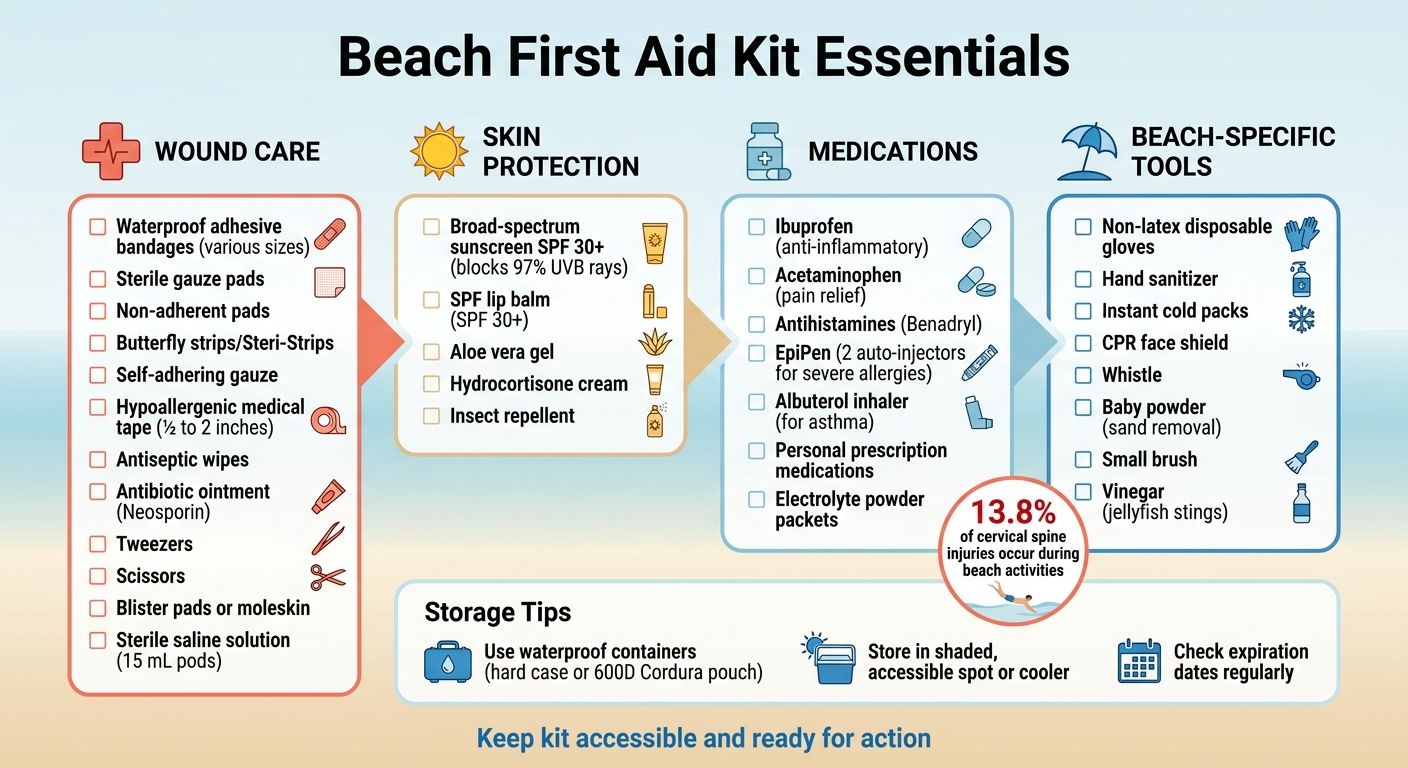
Beach First Aid Kit Essentials Checklist
Wound Care Supplies
Cuts and scrapes are almost inevitable during a day at the beach – sharp shells and rocky surfaces can easily cause minor injuries. Having the right supplies on hand ensures you can treat these mishaps quickly and get back to enjoying the sun and surf. Here’s what you’ll need to handle typical beach injuries effectively.
Bandages and Gauze
Waterproof adhesive bandages are a must for beach trips. Regular bandages lose their stickiness when wet, but waterproof ones stay in place even in saltwater. Pack a variety of sizes: standard strips for small cuts, as well as fingertip, knuckle, and larger patches for different injury sites. Look for high-quality options designed to resist both water and sand.
For larger or more serious wounds, include sterile gauze pads and non-adherent pads in your kit. These are gentle on the wound and won’t stick to the injury. Butterfly strips or Steri-Strips can help close the edges of deeper cuts, while self-adhering gauze is perfect for securing pads without the need for additional tape. Be sure to pack hypoallergenic medical tape in various widths (½ inch to 2 inches) for securing gauze when needed.
One important note: skip cotton balls or swabs – they can leave fibers in the wound. Stick to sterile gauze for cleaning and dressing injuries.
Antiseptic Wipes and Antibiotic Ointment
Proper wound cleaning is essential before applying any bandage. Start with antiseptic wipes to remove bacteria and dirt from minor cuts and scrapes. For a more thorough clean, flush the wound with sterile saline before using the wipes to clear away any debris. This two-step approach helps prevent sand and grit from becoming trapped in the wound.
After cleaning, apply antibiotic ointment like Neosporin to protect against infection. Seal the area with a waterproof bandage to keep the ointment in place and shield the wound from the elements. Always use non-latex disposable gloves during this process to minimize contamination risks. Also, check the expiration dates on wipes and ointments regularly, as heat and humidity at the beach can reduce their shelf life.
Tweezers and Scissors
Precise tools can make a big difference in wound care. Tweezers are essential for removing splinters, sea urchin spines, or other small debris lodged in the skin. Pair them with scissors for cutting medical tape, gauze, or bandages to the exact size needed. To keep these tools clean and rust-free in the salty, humid beach environment, store them in a waterproof, sealable hard case.
sbb-itb-af832cd
Sun and Skin Protection
Keeping your skin safe from the sun is just as important as treating injuries when you’re at the beach. UV rays can harm your skin in no time, so having the right sun protection items in your beach first aid kit is a must. These essentials not only shield you from sunburn but also help prevent skin irritation and long-term damage.
Sunscreen and SPF Lip Balm
Broad-spectrum sunscreen is your best defense against both UVA and UVB rays. UVA rays contribute to skin aging and tanning, while UVB rays are the main culprits behind sunburn and skin cancer. According to Dr. Saira George, M.D., an SPF 30 sunscreen effectively blocks 97% of UVB rays, while SPF 50 slightly increases that to 98% – a small but worthwhile difference for added protection.
Opt for water-resistant sunscreens that hold up during swimming or sweating, typically for 40 to 80 minutes. Lotions and creams are great options since they spread evenly and avoid any risks associated with inhaling sprays. Remember to reapply every two hours, or more often if you’re swimming or sweating frequently.
Don’t forget about your lips! Use an SPF lip balm with SPF 30 or higher to keep them protected. Reapply often, especially after eating or taking a dip in the water.
Aloe Vera Gel and Hydrocortisone Cream
Even with diligent sunscreen use, sunburns can still sneak through. That’s where aloe vera gel comes in – it provides a cooling sensation and soothes irritated skin, speeding up recovery. Before applying, make sure to gently remove any sand from your skin to avoid further irritation.
Hydrocortisone cream is another handy item for your kit. It’s great for calming itchy rashes, bug bites from sand flies, and even reactions to sea lice. These creams work quickly to reduce inflammation and discomfort. To keep them effective, store both aloe vera and hydrocortisone cream in a cooler or a shaded spot in your bag, and always check their expiration dates. Together, these products round out your skin care essentials for a stress-free beach day.
Pain Relief and Medications
Having the right medications on hand can transform a minor issue into a quick fix. Over-the-counter pain relievers and allergy treatments can tackle common beach-related problems, while keeping prescription medications nearby ensures those with chronic conditions stay safe. Here’s a breakdown of what to pack.
Pain Relievers
Ibuprofen and acetaminophen are must-haves for handling pain. Ibuprofen is especially effective for reducing inflammation caused by overexertion or minor injuries – perfect for easing soreness after beach volleyball or swimming. On the other hand, acetaminophen works well for general pain and headaches but doesn’t target inflammation. Be sure to pack both in their original containers. If you’re traveling with kids, bring liquid forms or smaller doses tailored to their age and weight.
Next, let’s cover how to manage allergic reactions.
Allergy Treatments
Antihistamines like Benadryl are essential for handling allergic reactions, from insect bites to jellyfish stings. They provide quick relief for itching, swelling, and hives. For those with severe allergies, an epinephrine auto-injector (EpiPen) is a must-have. As FAACT states, "Epinephrine is the single most important drug in the anaphylaxis emergency kit. It will rapidly act to reverse any and all signs of anaphylaxis". Always carry at least two auto-injectors – one may fail, or a second dose might be needed before help arrives. After using an injector, seek immediate medical attention.
For individuals with asthma, an albuterol inhaler (like Ventolin) is vital for managing sudden breathing difficulties. The Better Health Channel recommends, "Always give adrenaline injector first, and then asthma reliever puffer if someone with known asthma and allergy to food, insects or medication has sudden breathing difficulty".
Prescription Medications
Don’t forget to bring any prescribed medications you or your group members rely on. Running out during a trip can cause unnecessary stress and disrupt treatment for chronic conditions. Keep all prescription medications in waterproof, clearly labeled containers. It’s also wise to carry a medical summary that lists diagnoses, generic medication names, and known allergies in case medical care is needed while away from home. Lastly, ensure everyone knows where the first aid kit is and how to access these medications quickly in an emergency.
Beach-Specific Tools and Supplies
The beach environment comes with its own set of challenges – sand, salt water, and humidity can make standard first aid supplies less effective. While your basic kit covers common injuries, these beach-specific tools are tailored to handle issues unique to this setting. They’re designed to work alongside your core supplies, helping you manage injuries efficiently when the beach environment throws in extra complications.
Disposable Gloves and Hand Sanitizer
Non-latex disposable gloves are a must when treating wounds that may be contaminated with sand. They help reduce the risk of infection, while hand sanitizer ensures clean hands when fresh water isn’t readily available. These items are especially vital at the beach, where maintaining proper hygiene can be tricky due to the conditions.
Instant Cold Packs
For sprains, bruises, or even relief from heat exhaustion, instant cold packs are a quick and practical solution. A study on the Sunshine Coast revealed that 13.8% of cervical spine injuries were tied to beach activities, highlighting the importance of managing swelling and inflammation effectively.
Sterile Saline Solution
Sterile saline solution is indispensable for rinsing sand out of eyes or cleaning wounds without introducing bacteria, unlike ocean water. Small saline pods (15 mL) are particularly handy for quick access when someone needs immediate care for a wound or irritation.
Blister Pads or Moleskin
Hot sand and damp footwear can cause friction that leads to painful blisters. Blister pads or moleskin act as a protective barrier, whether you’re preventing irritation during a long walk or cushioning an existing blister. As CPR Certification Now explains, these supplies are specifically designed "to protect blisters from walking on hot sand".
| Tool | Primary Beach Use | Why It Matters |
|---|---|---|
| Disposable Gloves | Handling contaminated wounds | Prevents infection and cross-contamination |
| Hand Sanitizer | Cleaning hands when water isn’t available | Maintains hygiene during wound care |
| Instant Cold Pack | Sprains, bruises, heat relief | Reduces swelling and provides cooling |
| Sterile Saline | Flushing eyes and wounds | Safely removes sand and debris |
| Blister Pads | Friction from sand or wet shoes | Protects skin on hot surfaces |
Packing and Organization
Having an organized first aid kit can make all the difference when seconds count during an emergency. The right container and a simple system ensure you can act quickly without wasting precious time.
Waterproof Containers
Hard cases provide top-notch protection against crushing and water exposure. They’re ideal for keeping your supplies intact, even if your kit gets tossed around in a beach bag or accidentally dropped in water. On the other hand, soft waterproof pouches made from tough 600D Cordura are lightweight and flexible, making them easier to fit into packed totes or backpacks. Choose the option that best suits your needs, but remember to inspect the seals regularly – sand and humidity can weaken their waterproofing over time.
Store your kit in a shaded, easy-to-reach spot. Placing it in a cooler can help protect items like medications and sunscreen that are sensitive to heat, as extreme temperatures (over 100°F) can degrade both the container and its contents. Opt for clear or labeled containers so anyone in your group can quickly identify and grab the kit in a stressful moment. Make sure everyone knows where it’s stored and how to access it.
Once you’ve selected your container, use a checklist to organize and track your supplies.
First Aid Kit Checklist
Sorting your items by category makes it easier to pack and ensures you have everything needed for common beach-related injuries. Here’s a breakdown of essentials:
| Category | Essential Items |
|---|---|
| Wound Care | Adhesive bandages (various sizes), waterproof bandages, sterile gauze pads, adhesive tape, antiseptic wipes, antibiotic ointment, blister pads or moleskin, hydrogel or burn gel, sterile saline solution |
| Skin Protection | Broad-spectrum sunscreen (SPF 30+), SPF lip balm, aloe vera gel or after-sun lotion, hydrocortisone cream, insect repellent |
| Pain Relief | Ibuprofen or acetaminophen, antihistamines (for allergic reactions and bites), electrolyte powder packets, vinegar (for jellyfish stings), personal prescription medications (e.g., EpiPens, inhalers) |
| Tools | Tweezers, scissors, disposable nitrile gloves, hand sanitizer, instant cold packs, CPR face shield, whistle, baby powder (for sand removal), small brush |
Always check expiration dates before heading out. Small additions like baby powder can be incredibly useful for removing sand from skin prior to treating wounds, and vinegar is a must-have for areas where jellyfish are a concern. Keep your kit stocked and ready for anything!
Conclusion
A well-stocked first aid kit is your best defense against common beach hazards like jellyfish stings, sea urchin spines, sand irritation, and sunburn. Saltwater and sand can make even minor injuries tricky to handle, so having essentials like antiseptic wipes and waterproof bandages on hand helps prevent infections. As CPR Certification Now puts it, "Being prepared with a beach-specific first aid kit ensures that you are ready to handle any minor accidents or medical issues that may arise".
Thinking ahead can turn potential emergencies into manageable situations, allowing you to focus on enjoying your time at the beach. Quick action can stop minor injuries from becoming bigger problems, and keeping your first aid kit in an easily accessible spot – like your beach bag or cooler – ensures you’re ready to respond immediately.
Your surroundings also play a part in staying prepared. Choosing accommodations close to the beach can make all the difference in handling unexpected situations. For example, family-friendly rentals such as Aerie at 715 Ocean offer a convenient home base where you can address issues like heat exhaustion or minor injuries, all while keeping your supplies within reach.
Before heading out, take a moment to personalize your kit, check expiration dates, and let everyone know where it’s stored. This small effort pays off by giving you peace of mind, so you can focus on what matters most – enjoying sunny, carefree days with your loved ones. Preparation, combined with the right environment, ensures your beach outing stays safe and stress-free.
FAQs
How do I keep first aid supplies dry at the beach?
To keep your first aid supplies safe from water, sand, and humidity, opt for a waterproof, sealable box or bag. Look for something compact enough to carry easily but spacious enough to fit all the essentials. For added longevity, store the container away from direct sunlight to maintain its durability and ensure the supplies stay effective.
What should I add for jellyfish stings and sea urchin spines?
If you’re dealing with a jellyfish sting, having vinegar on hand can be a lifesaver. It helps neutralize the sting. After applying vinegar, carefully remove any tentacles to avoid additional irritation. For sea urchin spines, rinse the wound thoroughly with either tap or ocean water. It’s also important to keep the affected area as still as possible to minimize further injury.
What’s the fastest way to clean sand out of a cut or eye?
The fastest way to get rid of sand from a cut or your eye is to rinse it thoroughly with clean, running water or a saline solution. This method helps wash away the sand efficiently while reducing irritation or the risk of further damage. Be sure not to rub the area, as this can make things worse.