Goat Island near Isle of Palms is home to private residents – not a confirmed goat herd. My advice: view it from the water or a public shoreline, and <u>never land without permission</u>.
Here’s what to know:
- Today: The island has homes and docks, but no reliable public resident list or population count.
- Its past: Henry and Blanche Holloway lived there for about 30 years. One historical account describes roughly 200 goats, not a present-day herd.
- What you may see: Trees, marshes, waterfront homes, and nearby birds or dolphins. A wildlife sighting doesn’t prove an animal lives on the island.
- Where to look: The Isle of Palms Public Dock offers Intracoastal Waterway views, though it doesn’t show the whole island.
I’d treat current goat reports as unconfirmed and enjoy the island’s views and history without entering private property.
Goat Island’s Past Residents
The Holloways were the island’s best-known residents, and their story remains at the heart of Goat Island lore.
Henry and Blanche Holloway
Local histories describe Henry Holloway as a former Charleston butcher known as the Goat Man. He and Blanche lived on the north end of Isle of Palms before development changed their home. They moved to Goat Island around 1931, though some accounts put the move later.
Their shelter was built from driftwood, branches, and palm fronds, with no electricity or running water. They collected rainwater, grew a garden, gathered berries, and harvested oysters and clams.
Nearby residents sometimes brought supplies. According to one account, neighbors gave the aging couple a small hut for Christmas in 1961. The Holloways’ story is also linked to the island’s older goat legend.
The Island’s Historic Goat Herd
Local accounts describe goats roaming Goat Island and grazing on its low vegetation. Some histories say the goats were there before the Holloways arrived, leaving the origin of the island’s name uncertain.
sbb-itb-af832cd
Goat Island’s Residents Today
Goat Island is a private residential island reached by boat, with homes, docks, and waterfront lots. Its residents are private occupants, and no reliable public population count or resident list is available. Visitors should view the island from the water, without landing or entering private property.
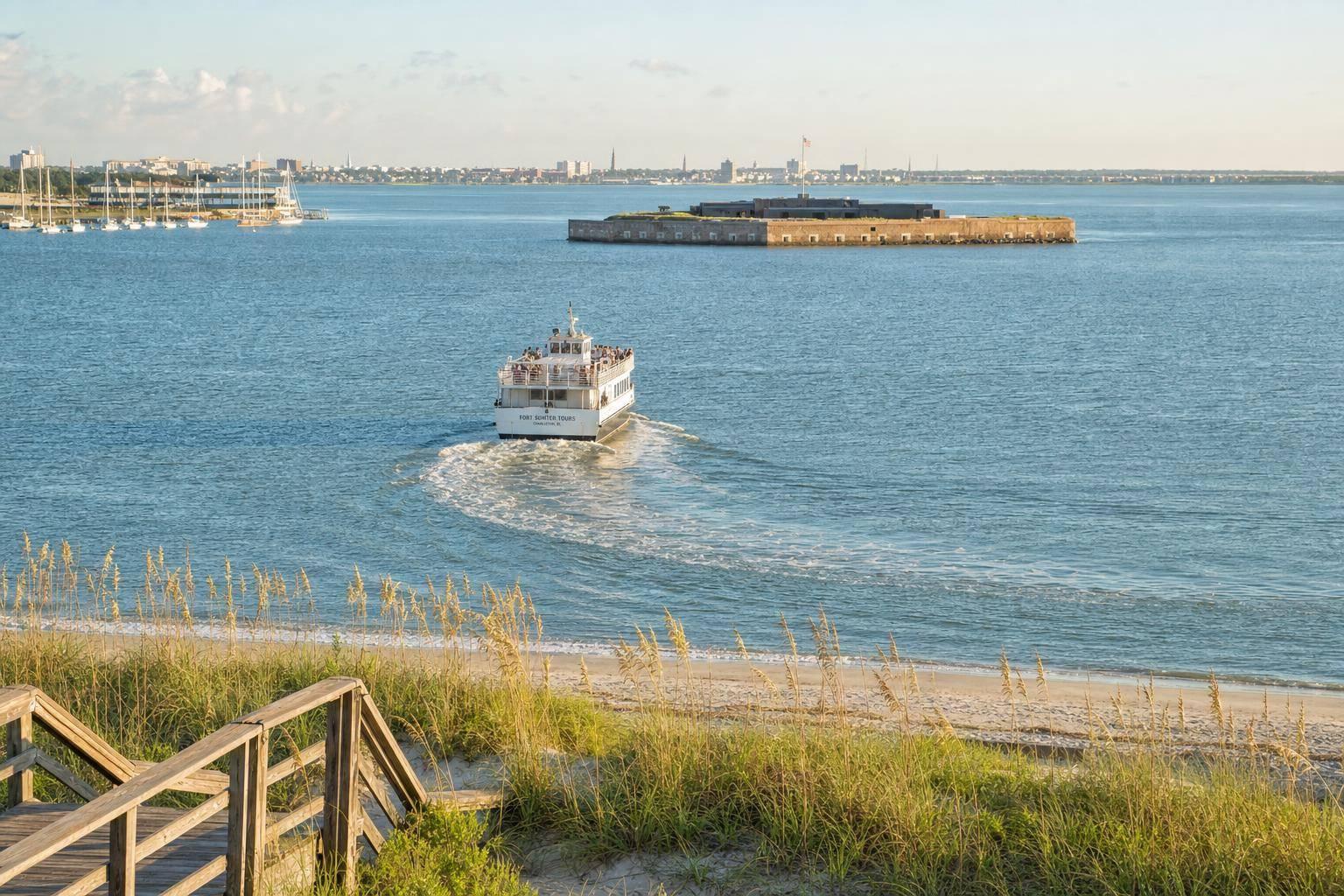
Depending on the tide, weather, and vegetation, you may see homes, docks, palmettos, and stretches of shoreline from your boat. The offshore view offers a way to enjoy Goat Island’s shoreline, water views, and local lore.
Wildlife, Views, and Local Stories
Coastal Birds and Nearby Marine Life
Beyond the private homes, the marshes and water tend to draw visitors’ attention. You may spot coastal birds, fish, dolphins, and other wildlife near Goat Island. These are nearby sightings, not confirmed island residents. The surrounding marshes also provide important habitat for migratory shorebirds.
Low tide can expose oyster beds and mudflats; high tide covers them. Bring binoculars and watch from a distance.
Views From the Water and Public Shore
Public vantage points let you enjoy these habitats without disturbing them. The Isle of Palms Public Dock at 50 41st Avenue offers views of the Intracoastal Waterway from sunrise to sunset. Follow posted rules, and note that the dock doesn’t show all of Goat Island.
From nearby navigable waters, marsh edges and tidal creeks may be easier to see at low tide. Stay clear of private docks, don’t feed wildlife, and don’t enter oyster beds.
Goat Island’s History and Local Lore
Some of Goat Island’s best-known stories belong to its past – you won’t see them from today’s shoreline. Henry Holloway’s “Goat Man” nickname is part of local lore, not a mystery to solve on private land.
Treat claims about his shelter, routines, or burial as historical accounts unless a reliable source confirms them. They aren’t a reason to search private property.
Conclusion: Visiting With Respect
Goat Island’s story stretches from the Holloways and the old goat herd to today’s private homes. Treat any current goat report as unconfirmed.
Enjoy Goat Island from the water or a public viewpoint. Never land without permission, and leave the island and its wildlife undisturbed.
FAQs
How can I verify current goat sightings?
There’s no official public registry or real-time tracking system to confirm goat sightings on Goat Island. The goats are part of local lore and live in secluded areas reached mainly by boat. Spotting them comes down to chance, not a scheduled viewing.
If you visit the nearby salt marshes or waterways, bring binoculars to watch wildlife from a distance and respect its natural habitat.
When is wildlife easiest to spot near Goat Island?
Wildlife near Goat Island and Isle of Palms is most active from late spring through early fall. Plan your visit for early morning or late afternoon, when calmer waters and more wildlife activity make viewing easier. Warmer waters also bring dolphin pods closer to shore.
For birdwatchers, spring migration is the best time to see a broad mix of species passing through.
Where can I learn more about the Holloways?
The provided search results don’t mention the Holloways or point to sources where you can learn more about them.