Tidal pools are nature’s hands-on classroom, offering kids an up-close look at marine life like sea stars, crabs, and anemones. They’re best visited during low tide, ideally around negative low tides, for the richest experience. Safety is key – keep kids close, avoid slippery rocks, and always monitor rising tides. Pack essentials like water shoes, a magnifying glass, and a field guide to make the outing fun and educational. Teach children to respect these delicate ecosystems by leaving everything as they found it and avoiding harmful chemicals like sunscreen in the water. Back home, extend the adventure with activities like journaling, sketching, or sorting discoveries into categories. A little planning ensures a safe, memorable day for the whole family.
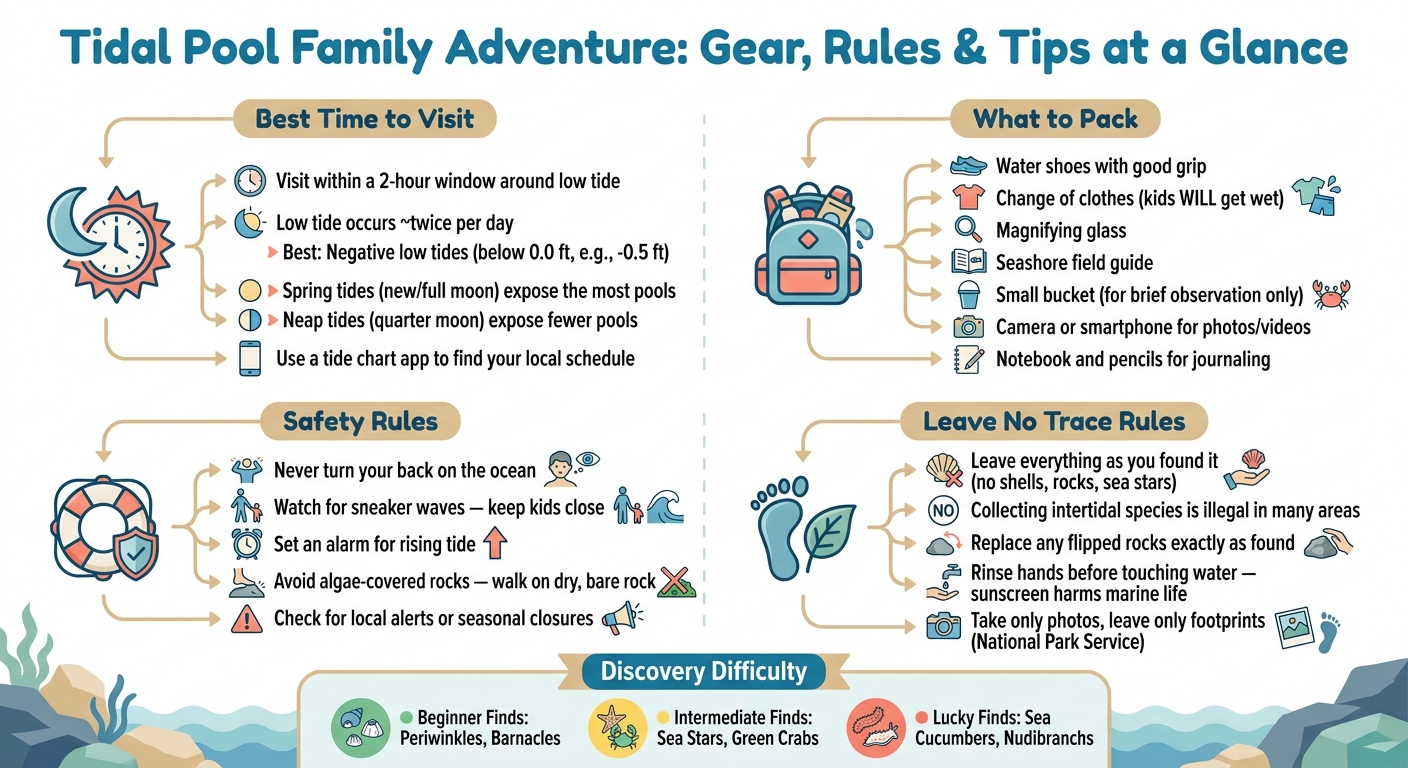
Tidal Pool Family Adventure: Gear, Rules & Tips at a Glance
Planning Your Tidal Pool Visit: Timing, Safety, and Gear
Getting ready for a tidal pool adventure can make the difference between a stressful outing and a fun, memorable experience.
How to Read Tides and Pick the Best Time to Visit
Tidal pools are best explored during low tide, which happens about twice a day. Aim to visit within a two-hour window around low tide for the best access.
For an even better experience, look for negative low tides on tide charts. These occur when the tide level drops below the average low-water mark (e.g., 0.0 feet or lower, like -0.5). During these times, more marine life is exposed than during a typical low tide. You can easily find tide charts through apps or websites tailored to your beach location.
Pay attention to the lunar cycle as well. Spring tides, which occur during new and full moons, expose more tidal pools, while neap tides (quarter moons) reveal fewer.
Once you’ve planned your timing, make sure to prioritize safety for a worry-free visit.
Safety Tips for Families at Tidal Pools
The number one safety rule: never turn your back on the ocean. Sneaker waves can appear without warning, so keep children close, especially near the water’s edge.
Monitor the tide carefully. Rising water can quickly block access to certain areas, so set an alarm to remind yourself when it’s time to head back. Also, check for any local alerts or seasonal closures that might affect your visit, as some areas may restrict access to protect wildlife.
Be cautious on slippery surfaces. Rocks covered in algae can be treacherous, while dry, bare rocks are generally safer to walk on. Move slowly, stick to stable surfaces, and keep an eye on where children are stepping.
What to Pack: A Gear Checklist
Start with water shoes with good grip to protect feet and reduce the risk of slipping on wet rocks. Bring along a change of clothes – kids will almost certainly get wet.
Pack items that make the outing both fun and educational. A magnifying glass can help you take a closer look at small creatures like barnacles and sponges, while a seashore field guide is great for identifying the marine life you encounter. If you want to observe creatures briefly, bring a small bucket, but remember to return everything to its natural spot.
For added convenience, Aerie at 715 Ocean offers amenities to make your day trip even easier.
Teaching Kids How to Respect Tidal Pools
After ensuring a safe visit, it’s equally important to teach kids how to treat tidal pools with care and respect.
Tidal pools might seem rugged, but they are delicate ecosystems. As Acadia National Park explains:
"Our careless handling and footsteps can do damage that the changing tides cannot."
Helping kids become thoughtful visitors goes beyond just following rules. It’s about fostering an understanding that these pools are homes for living creatures, not just places to explore.
Leave No Trace Rules for Tidal Pools
Respecting tidal pools isn’t just about safety – it’s about preserving the habitat for the tiny creatures that live there.
The golden rule? Leave everything exactly as you found it. That means no taking shells, rocks, sea stars, or even empty crab shells. In many places, it’s illegal to collect intertidal species. More importantly, removing even small items can upset the balance of the ecosystem.
Rocks need extra care. The undersides of rocks often house crabs, snails, and worms, all of which depend on the cool, moist environment. Flipping a rock and leaving it exposed to the sun can harm or kill the creatures underneath. If a child looks under a rock, make sure they place it back exactly as it was.
Another often-overlooked concern is chemical exposure. Sunscreen, hand sanitizer, and bug spray can harm marine life. Encourage kids to rinse their hands before touching the water or any animals. This small step helps protect the sensitive ecosystem.
How to Explain Tidal Pool Rules to Kids
The best way to help kids remember the rules is to use an analogy they already understand. For example, compare the tidal pool to someone else’s home – they’re just guests visiting for a short time. The National Park Service suggests this approach because it naturally encourages respectful behavior.
Here’s a simple table that translates key rules into kid-friendly language:
| Rule | What to Tell Your Kids |
|---|---|
| Don’t collect anything | "Imagine if someone came into your room and took your favorite toy. We leave everything here so the animals have what they need." |
| Don’t flip rocks | "Rocks are like roofs for small animals. If we move them, we take away their shelter." |
| Stay on bare rock | "The dry rocks are like sidewalks. The pools and seaweed are the animals’ living rooms – let’s not walk through their living room." |
| Wash off sunscreen | "Fish and sea creatures breathe the water. Our lotions can make their water dirty, so we rinse our hands first." |
If touching animals is allowed, teach kids to be as gentle as they would with their own eyeball. That comparison tends to stick with kids and naturally encourages careful behavior.
Fun and Educational Activities for Kids at Tidal Pools
Once kids know how to respect tidal pools, the adventure truly begins. These natural habitats are full of fascinating creatures and subtle movements that can captivate young minds. With a little guidance, a simple visit can transform into an exciting hands-on science experience.
Games for Younger Kids
For toddlers and younger children, sensory play and exploration are key. A fun activity to try is the Muffin Tin Mini-Aquarium. Start by filling a muffin tin with seawater. As kids explore, they can place small finds – like a tiny snail, hermit crab, or piece of kelp – into separate compartments for closer observation. Once they’ve had a good look, everything gets returned to its original spot. This activity not only encourages curiosity but also doubles as a sorting and counting exercise, teaching kids the importance of "catch and release."
Providing simple tools like a small net or tweezers can make the experience even more engaging, helping kids focus on their discoveries.
Activities for Older Kids
Older children can dive into activities that challenge their critical thinking. One idea is a Habitat Detective game. Ask them to pick an animal and explain why it might choose its specific habitat. For example, why does a sea anemone thrive in a shaded pool, or why does a hermit crab prefer rocky areas? This encourages scientific reasoning and helps them better understand the diversity of life in tidal pools.
Another option is setting up a classification station using the muffin tin. Older kids can sort their finds by type, color, or size while sketching observations in a notebook. You can also encourage them to think critically by asking what might happen if a tide pool creature were moved to a different environment, linking habitat characteristics to survival needs.
Documenting these activities with photos or videos adds another layer of learning and creates lasting memories.
Using Photos and Videos to Reinforce Learning
Taking photos and videos of discoveries is a great way to extend the learning experience beyond the tidal pools. Instead of collecting specimens, encourage kids to capture moments like a sea star slowly moving or a limpet clinging tightly to a rock. These images can reveal fascinating details that might be missed during live observation.
At Aerie at 715 Ocean, the Smart TVs provide an ideal way to review the day’s findings as a family. Zoom in on high-resolution photos to explore textures, colors, or even tiny legs that weren’t obvious in the field. Use these visuals to spark discussions, asking questions like, "What did we discover today? Why do you think it was hiding under that rock?" These post-visit conversations help reinforce what kids have learned and turn a fun day into a meaningful, lasting memory.
sbb-itb-af832cd
Continuing the Learning Back at Aerie at 715 Ocean
Bring the wonder of tidal pools home with fun, hands-on activities for the family. Just like exploring the pools ignites curiosity, reflecting and creating together keeps that spark alive. At Aerie at 715 Ocean, the open-concept living spaces provide the perfect backdrop for sharing and building on your discoveries.
Sharing Discoveries After the Visit
While dinner simmers in the gourmet kitchen, gather the kids at the dining table with pencils and notebooks. Ask them to sketch their favorite tidal pool creature – maybe a hermit crab scuttling across a rock, a sea star gripping a crevice, or an anemone transforming as water flows over it. Encourage them to describe what they saw and felt: the rough texture of barnacles, the stillness of a sculpin, or the delicate movement of a nudibranch. Writing and drawing help solidify these memories far better than just talking about them.
Turn this into a fun family game by sorting discoveries into three categories:
- Beginner finds: Periwinkles, barnacles
- Intermediate finds: Sea stars, green crabs
- Lucky finds: Sea cucumbers, nudibranchs
This playful approach makes reflection interactive and rewarding, setting the stage for creating a tide pool journal.
Starting a Tide Pool Journal
A tide pool journal becomes a keepsake of your adventures. A simple spiral notebook works perfectly. Have kids jot down the date, tide level, and weather for each entry. Over time, they’ll start noticing patterns, like how minus tides reveal hidden creatures. Encourage them to record details about each creature – like the "flower-like" appearance of a submerged anemone or the feathery arms of a barnacle.
For younger kids, a "Tide Pool Passport" can make journaling even more engaging. Print or draw simple illustrations of common creatures with check-off boxes so they can track their finds across multiple visits. For added depth, use resources like the Peterson Field Guide to the Atlantic Seashore to include scientific names and fun facts about each creature’s behavior.
Getting the Whole Family Involved
The spacious living areas at Aerie make it easy to turn journaling into a group activity. Grandparents or older family members can look up creatures in a field guide while kids sketch, or share their own beach memories from years past. This shared experience fosters a deeper connection to nature and creates lasting family memories.
"The rule is simple: take only photos, leave only footprints." – National Park Service
End the day by revisiting this principle together. Discuss why it’s important to leave shells and creatures behind rather than taking them home. Hearing this message from a grandparent or older sibling often resonates more deeply with kids, reinforcing a sense of responsibility in a way that feels natural and heartfelt.
Conclusion: How to Make Tidal Pool Visits a Family Highlight
Planning ahead can turn a tidal pool visit into a memorable family adventure. Start by checking tide charts, packing the right gear, and picking convenient spots like the 34th Avenue boardwalk or 28th Avenue. These small steps ensure the outing is smooth and enjoyable for everyone. Plus, they set the tone for a day filled with discovery and fun, both on the beach and back at your rental.
The excitement doesn’t have to end when you leave the shoreline. Encourage kids to keep the experience alive with activities like journaling or sketching their favorite finds. These creative follow-ups help them reflect on the day and make the memories last longer.
Staying at Aerie at 715 Ocean makes it even easier to enjoy your day. Its Front Beach location is just a short walk from public restrooms, outdoor showers, and restaurants like Coconut Joe’s. This means you can quickly transition from a sandy adventure to a relaxing meal. Once back at the rental, the spacious open-concept layout, gourmet kitchen, and large dining area provide the perfect setting for the whole family to unwind and share stories about the day.
FAQs
How do I find a negative low tide time?
To identify a negative low tide time, use tide tables or online tide prediction tools that display low tide heights and times. Specifically, look for tide heights listed as values below zero, as these indicate negative tides. Resources such as local tide charts or websites with detailed hourly tide data are especially useful. For the Isle of Palms area, refer to local tide charts to get precise and reliable information.
What should I do if the tide starts rising fast?
If you notice the tide rising quickly while you’re checking out tidal pools, head to higher ground right away. This helps you avoid getting caught in strong currents or rising water. Always stay aware of tidal changes by checking tide tables and local forecasts ahead of time. The moment you see the tide coming in fast, it’s best to leave low-lying areas to stay safe.
What are easy tide pool games for different ages?
- For younger kids: Turn your visit into a fun search-and-find game! Look for shells, crabs, starfish, or other marine creatures. Make it more exciting by asking them to find specific items, like a striped shell or a tiny crab.
- For older kids: Create a scavenger hunt or play "Marine Life Bingo." Make a list of tide pool inhabitants – like sea anemones, barnacles, or hermit crabs – and see who can spot them all first.
- For everyone: Try an "Underwater Treasure Hunt" by hiding small, safe objects in the tide pools for others to discover. You could also bring some art supplies and let everyone draw tide pool scenes, combining creativity with a bit of marine biology!